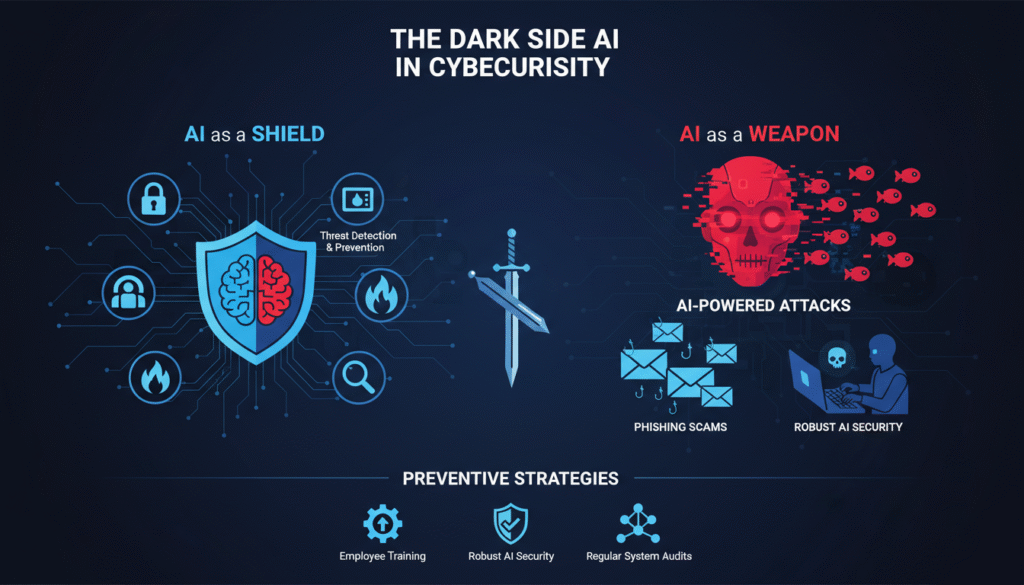
As artificial intelligence (AI) continues to revolutionize various industries, its impact on cybersecurity is both transformative and concerning. While AI enhances security measures, it simultaneously introduces new vulnerabilities that businesses must address. The dark side of AI in cybersecurity encompasses a range of threats, including AI-powered cyberattacks, automated phishing and deepfake scams, data breaches using intelligent systems, and AI-driven malware and ransomware. In this blog, we will explore these risks and provide actionable strategies for businesses to safeguard themselves in 2026. Companies leveraging AI cybersecurity solutions can better navigate these challenges.
Understanding the Dark Side of AI in Cybersecurity
The integration of AI in cybersecurity has created a double-edged sword. On one hand, AI tools can identify threats and respond to them faster than human analysts. On the other hand, cybercriminals are also utilizing AI to develop sophisticated attacks. This dual use of technology raises significant concerns for businesses, particularly as the landscape evolves.
AI-Powered Cyberattacks
AI enables cybercriminals to automate and enhance their attacks. For instance, AI algorithms can analyze vast amounts of data to identify vulnerabilities in systems. This capability allows hackers to launch targeted attacks with greater precision. A notable example occurred in 2026 when a major financial institution was breached due to an AI-driven attack that exploited a previously unknown software vulnerability. The incident highlighted the potential for AI to create highly effective and stealthy cyberattacks.
Automated Phishing and Deepfake Scams
Phishing attacks have become increasingly sophisticated with the advent of AI. Cybercriminals can now generate convincing emails and messages that mimic legitimate communications. Automated phishing scams can target thousands of users simultaneously, increasing the likelihood of success. Additionally, deepfake technology allows attackers to impersonate individuals, making scams even more believable. For example, a deepfake video of a CEO instructing employees to transfer funds was used in a 2026 scam that cost a company millions.
Data Breaches Using Intelligent Systems
Data breaches remain a significant concern for businesses, and AI is often at the center of these incidents. Intelligent systems can be exploited to gain unauthorized access to sensitive information. In 2026, several high-profile data breaches involved AI tools that bypassed traditional security measures. These breaches not only resulted in financial losses but also damaged reputations, leading to long-term consequences for the affected companies.
AI-Driven Malware and Ransomware
The rise of AI-driven malware and ransomware poses a severe threat to organizations. Cybercriminals can leverage AI to create malware that adapts and evolves, making it harder to detect. Ransomware attacks have become more targeted and efficient, often using AI to identify the most valuable data to encrypt. In 2026, a significant ransomware attack on a healthcare provider demonstrated how AI could facilitate attacks that cripple essential services, putting lives at risk.
Why Startups and SMEs Are at Higher Risk in 2026
Startups and small to medium-sized enterprises (SMEs) face unique challenges in the evolving cybersecurity landscape. Many of these businesses lack the resources to implement robust security measures, making them attractive targets for cybercriminals. Additionally, the rapid pace of technological advancement means that these organizations may not be aware of the latest threats and vulnerabilities.
Limited Resources and Expertise
Startups and SMEs often operate with limited budgets, which can restrict their ability to invest in advanced cybersecurity solutions. Many businesses report that they do not have dedicated cybersecurity personnel, leaving them vulnerable to attacks. This lack of expertise can result in inadequate responses to emerging threats, increasing the likelihood of successful cyberattacks.
Increased Attack Surface
As businesses grow and adopt new technologies, their attack surface expands. Startups and SMEs frequently utilize cloud services, mobile applications, and remote work solutions, all of which can introduce new vulnerabilities. In 2026, the increase in remote work has made it essential for businesses to understand the risks associated with these technologies and implement appropriate security measures.
Actionable Solutions and Prevention Strategies
To mitigate the risks associated with the dark side of AI in cybersecurity, businesses must adopt a proactive approach. Here are several actionable solutions and prevention strategies:
Implement AI-Based Security Tools
Investing in AI-driven security tools can enhance an organization’s ability to detect and respond to threats. These tools can analyze patterns and identify anomalies, allowing for faster incident response. Businesses using AI-driven security tools can better protect themselves against evolving cyber threats.
Conduct Employee Awareness Programs
One of the most effective ways to combat cyber threats is through employee training. Implementing employee awareness programs can educate staff about the risks of phishing, social engineering, and other cyber threats. Regular training sessions can help employees recognize suspicious activities and respond appropriately.
Adopt Multi-Layered Cybersecurity Strategies
A multi-layered approach to ai in cybersecurity can provide additional protection against attacks. This strategy involves implementing various security measures, such as firewalls, intrusion detection systems, and encryption. Businesses using multi-layered cybersecurity strategies can create a more resilient defense against potential breaches.
Stay Informed About Emerging Threats
Staying updated on the latest cybersecurity trends and threats is crucial for businesses. Regularly reviewing industry reports and participating in cybersecurity forums can help organizations remain aware of new risks and best practices. In 2026, many businesses report that proactive monitoring of threats has significantly reduced their vulnerability to attacks.
Conclusion
The dark side of AI in cybersecurity presents significant risks for businesses in 2026. From AI-powered cyberattacks to automated phishing scams, the threats are evolving and becoming more sophisticated. Startups and SMEs, in particular, must be vigilant and proactive in addressing these challenges. By implementing effective security measures, investing in AI-driven tools, and educating employees, organizations can better protect themselves from the looming dangers of AI in cybersecurity.