- Introduction: The Rise of AI in Military Operations
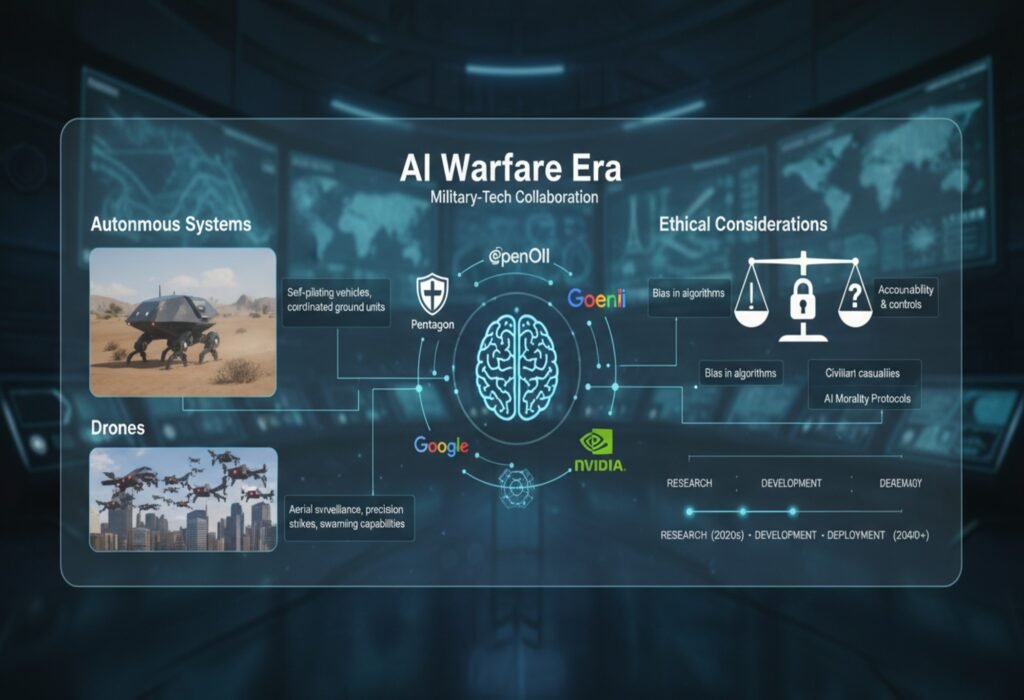
Artificial intelligence is rapidly entering military and defense systems worldwide, marking a significant shift in how nations approach warfare. The Pentagon‘s recent partnership with industry giants like OpenAI, Google, and Nvidia signifies the dawn of a new era in AI warfare. This collaboration aims to enhance military operations, streamline decision-making processes, and integrate cutting-edge technology into defense strategies. As we delve into the implications of this partnership, we will explore how AI is transforming military operations, the ethical concerns that arise, and the global reactions to this technological leap.
Introduction: The Rise of AI in Military Operations
The integration of into military operations is reshaping the landscape of defense. In 2026, many military analysts report that AI-driven solutions are becoming essential for national security. Countries that embrace AI are gaining a strategic advantage, as these technologies enable faster data processing, enhanced surveillance, and improved decision-making capabilities. The Pentagon‘s commitment to AI not only reflects this trend but also highlights the urgency to adapt to the evolving nature of warfare.
The rise of AI in military applications is not merely about automating tasks; it encompasses a broader vision where machines assist human operators in complex scenarios. From predictive analytics that forecast potential threats to autonomous systems that can operate independently, the role of AI in military operations is expanding rapidly. This shift raises critical questions about the future of warfare and the ethical implications of deploying such technologies.
Why the Pentagon Partnered with OpenAI, Google, and Nvidia
The Pentagon’s decision to partner with leading AI firms like OpenAI, Google, and Nvidia stems from a desire to leverage the best technologies available. These companies are at the forefront of AI development, providing the Pentagon with access to cutting-edge research and innovative solutions. The collaboration aims to develop robust that enhance operational efficiency and effectiveness.
By working with OpenAI, the Pentagon seeks to harness advanced natural language processing capabilities, enabling better communication and analysis of intelligence data. Google’s expertise in data analytics and machine learning will facilitate the processing of vast amounts of information, allowing military personnel to make informed decisions quickly. Nvidia’s powerful GPUs will accelerate AI computations, making real-time data processing feasible in critical situations.
This partnership also reflects a growing recognition that AI is not just a tool but a transformative force in modern warfare. As adversaries adopt similar technologies, the Pentagon understands the need to stay ahead in the AI arms race, ensuring that the U.S. military maintains its technological edge.
Transforming Military Operations with AI
AI is fundamentally changing the way military operations are conducted. From logistics to battlefield strategies, the integration of AI technologies is enhancing capabilities across various domains. For instance, AI algorithms can optimize supply chain management, ensuring that troops have the resources they need when they need them. Additionally, predictive maintenance powered by AI can extend the lifespan of military equipment, reducing costs and increasing readiness.
Moreover, AI is improving the accuracy of military operations. Advanced algorithms can analyze drone footage and satellite imagery to identify potential threats with remarkable precision. This capability minimizes collateral damage and enhances mission success rates. However, the implementation of AI also raises questions about accountability and decision-making in high-stakes situations. Understanding the in military contexts is crucial as these technologies become more prevalent.
The Role of Autonomous Systems in Warfare
Autonomous systems are poised to play a pivotal role in the future of warfare. These systems, which can operate without direct human intervention, offer numerous advantages, including increased efficiency and reduced risk to human life. The Pentagon‘s collaboration with tech giants aims to enhance the capabilities of these .
For example, autonomous drones can conduct surveillance missions in hostile environments, gathering intelligence without endangering personnel. Similarly, ground-based robotic systems can assist in logistics and supply management, allowing troops to focus on strategic operations. However, the deployment of autonomous systems raises ethical concerns regarding their use in combat situations. The potential for machines to make life-and-death decisions without human oversight is a contentious issue that requires careful consideration.
Surveillance, Drones, and Cyber Warfare
The integration of AI into surveillance, drones, and cyber warfare is transforming how military operations are conducted. AI-powered surveillance systems can process vast amounts of data from various sources, providing real-time insights into enemy movements and potential threats. This capability is crucial in modern warfare, where information superiority can dictate the outcome of conflicts.
Drones equipped with AI technology are becoming increasingly sophisticated. They can autonomously navigate complex environments, conduct reconnaissance, and even engage in combat operations. The in warfare is not just about enhancing capabilities but also about redefining the rules of engagement.
Cyber warfare is another area where AI is making significant inroads. AI algorithms can detect and respond to cyber threats in real time, protecting critical infrastructure from attacks. As nations increasingly rely on digital systems, the need for robust cybersecurity measures powered by AI becomes paramount.
Ethical Concerns Surrounding AI in Warfare
The rise of AI in military operations brings forth a host of ethical concerns. One of the primary issues is the potential loss of human control over lethal decision-making. As autonomous systems become more prevalent, the question arises: who is accountable for the actions of a machine? The lack of clear accountability could lead to unintended consequences and escalation of conflicts.
Additionally, the deployment of AI in warfare raises concerns about bias and discrimination. AI systems trained on biased data may perpetuate existing inequalities, leading to unfair targeting in military operations. Ensuring that AI technologies are developed and implemented ethically is vital to maintain public trust and uphold international humanitarian laws.
Global Reactions to AI Warfare
The Pentagon‘s partnership with AI leaders has garnered mixed reactions globally. While some nations view this collaboration as a necessary step to maintain military superiority, others express concerns about an escalating arms race. Countries like China and Russia are investing heavily in their AI capabilities, prompting fears of a technological divide in military power.
International organizations and advocacy groups are calling for regulations governing the use of AI in warfare. The need for global dialogue on ethical standards and accountability in AI deployment is becoming increasingly urgent. As nations navigate this new landscape, the implications of AI warfare will shape international relations and security dynamics.
Comparison with China and Other Countries in the AI Defense Race
In the race for military AI dominance, the U.S. faces stiff competition from countries like China. China has made significant investments in AI research, focusing on developing technologies for surveillance, autonomous systems, and cyber warfare. Recent data shows that by 2026, China aims to become a global leader in AI, with military applications being a key component of its strategy.
Other countries, including Russia and Israel, are also advancing their military AI capabilities. Israel, known for its innovative defense technologies, is leveraging AI to enhance its intelligence-gathering processes and autonomous systems. As nations compete for technological superiority, the implications for global security and military strategy are profound.
Risks and Future Implications of AI-Powered Warfare
The integration of AI into military operations carries inherent risks. One significant concern is the potential for AI systems to malfunction or be hacked, leading to catastrophic consequences. The reliance on technology in warfare raises questions about the resilience of military operations in the face of cyber threats.
Moreover, the normalization of AI in warfare could lead to a desensitization to violence. As machines take on more roles in combat, the human element of warfare may diminish, impacting how societies perceive conflict. The future implications of AI-powered warfare extend beyond the battlefield, influencing political, ethical, and social landscapes.
Conclusion: Navigating the Future of AI Warfare
The Pentagon‘s partnership with OpenAI, Google, and Nvidia marks a significant milestone in the evolution of military operations. As AI continues to reshape warfare, understanding its implications is crucial for policymakers, military leaders, and society at large. The ethical concerns, global reactions, and technological advancements will define the future of military strategy in an era increasingly dominated by artificial intelligence.
As we move forward, it is essential to strike a balance between harnessing the potential of AI and addressing the ethical challenges it presents. The path to responsible AI warfare will require collaboration, dialogue, and a commitment to upholding humanitarian principles in the face of rapid technological change.