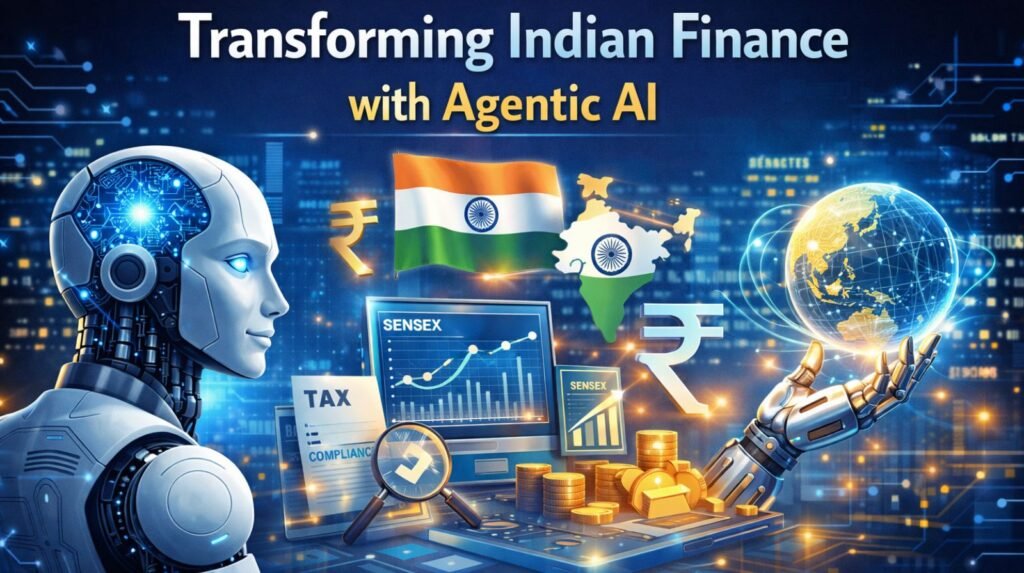
Agentic AI in Indian Finance: A New Era of Automation
In the bustling world of Indian finance, traditional systems have long been the backbone of operations. However, Agentic AI these systems often come with their own set of challenges—manual accounting, tedious GST filing, and compliance processes that are time-consuming and prone to human error. Kal tak accountant kaam karta tha… kal AI khud kaam karega. As the financial landscape evolves, the introduction of is set to transform how finance operates in India, moving from mere assistance to independent execution of financial tasks.
Introduction: The Burden of Traditional Finance in India
The conventional finance processes in India are laden with inefficiencies. Many businesses still rely on manual data entry and paper-based systems, leading to increased chances of errors and compliance issues. This heavy reliance on human intervention not only slows down operations but also diverts valuable resources away from strategic decision-making.
Businesses using AI in GST automation gain a competitive edge, allowing them to streamline their compliance processes and reduce the burden of manual labor. As the demand for efficiency grows, Indian SMEs are recognizing the need for a shift towards more automated solutions that can alleviate these challenges.
The Inefficiencies of Manual Processes
Manual accounting often results in discrepancies that can lead to significant financial losses. The time spent on reconciling accounts and filing taxes could be better utilized in strategic planning and growth initiatives. With the advent of Agentic AI, these tasks can be automated, allowing businesses to focus on what truly matters.
The Need for Transformation
As the financial environment becomes more complex, the need for a transformation in how financial tasks are managed is becoming increasingly evident. The integration of technology into finance is no longer an option but a necessity for survival in a competitive marketplace.
What is Agentic AI?
refers to advanced artificial intelligence systems that possess the ability to plan, decide, and execute tasks independently, rather than just assisting human operators. This level of autonomy allows for a more streamlined approach to finance, where AI can handle complex calculations and processes without constant human oversight.
Businesses using AI compliance tools India can automate their compliance checks, ensuring that they adhere to regulations without the manual oversight that often leads to errors.
Understanding Agentic AI
Agentic AI goes beyond traditional AI by incorporating decision-making capabilities that allow it to adapt to changing circumstances and make informed choices. This adaptability is crucial in the fast-paced world of finance, where conditions can shift rapidly.
The Role of AI in GST Automation
One of the most significant applications of Agentic AI is in GST automation. By automating the filing process, businesses can ensure accuracy and timeliness, reducing the risk of penalties and enhancing compliance. This not only saves time but also builds trust with stakeholders.
Why Indian Finance is Ready for Agentic AI
The Indian finance sector is ripe for the adoption of Agentic AI due to several factors. With a growing emphasis on digitization and efficiency, businesses are increasingly looking for solutions that can enhance their operations.
Companies are turning to automated accounting tools that leverage Agentic AI to manage their financial tasks efficiently. This shift is indicative of a broader trend towards embracing technology in finance.
The Digital Transformation Wave
The push for digital transformation in India is evident across various sectors. Finance is no exception, as businesses recognize the need to modernize their processes to remain competitive. The integration of Agentic AI aligns perfectly with this trend, offering a solution that enhances operational efficiency.
Rising Demand for Efficiency
As competition intensifies, the demand for efficiency in financial operations is at an all-time high. Businesses are seeking ways to streamline their processes, reduce costs, and improve accuracy. Agentic AI presents a viable solution that can help achieve these goals.
Use Cases in Indian Finance
The applications of Agentic AI in Indian finance are vast and varied. From automating routine tasks to enhancing decision-making processes, the potential use cases are numerous.
Businesses utilizing AI applications in business are already experiencing the benefits of integrating Agentic AI into their operations, showcasing its transformative power.
Automating Routine Accounting Tasks
Agentic AI can take over repetitive tasks such as data entry, invoice processing, and reconciliation, freeing up finance teams to focus on more strategic initiatives. This automation not only improves efficiency but also reduces the likelihood of human error.
Enhancing Financial Forecasting
With its ability to analyze vast amounts of data, Agentic AI can provide insights that enhance financial forecasting. By identifying trends and patterns, businesses can make informed decisions that drive growth.
Streamlining Compliance Processes
Compliance is a critical aspect of finance in India. Agentic AI can automate compliance checks, ensuring that businesses adhere to regulations without the constant need for manual oversight. This not only saves time but also reduces the risk of non-compliance.
Benefits for Businesses
The advantages of adopting Agentic AI in finance are substantial. From cost savings to improved accuracy, businesses stand to gain a lot from this technological shift.
Companies leveraging AI-driven decision making are finding that they can make faster and more informed financial decisions, ultimately leading to better outcomes.
Cost Reduction
By automating routine tasks, businesses can significantly reduce labor costs associated with manual processes. This cost-saving can be redirected towards more strategic initiatives, fostering growth and innovation.
Improved Accuracy
The integration of Agentic AI reduces the risk of human error, leading to more accurate financial reporting and compliance. This accuracy builds trust with stakeholders and enhances the overall reputation of the business.
Enhanced Decision-Making
With access to real-time data and insights, businesses can make informed decisions quickly. Agentic AI empowers finance teams to act decisively, leading to improved outcomes and a competitive edge.
Challenges & Risks
While the benefits of Agentic AI are clear, there are also challenges and risks associated with its adoption. Understanding these challenges is crucial for businesses looking to implement this technology.
Addressing Challenges in AI Adoption
One of the primary challenges is the resistance to change within organizations. Many employees may feel threatened by the introduction of AI, fearing job displacement. It is essential for businesses to communicate the benefits of Agentic AI and provide training to ease this transition.
Data Security Concerns
As with any technology that relies on data, there are concerns regarding data security and privacy. Businesses must ensure that robust security measures are in place to protect sensitive financial information from breaches.
Future of Agentic AI in India
The future of Agentic AI in Indian finance looks promising. As more businesses recognize its potential, the adoption of this technology is expected to grow significantly.
The ongoing evolution of AI in accounting India will continue to shape the financial landscape, making it more efficient and responsive to the needs of businesses.
A Shift Towards Full Automation
In the coming years, we can expect a shift towards full automation of financial processes. As Agentic AI becomes more sophisticated, its ability to handle complex tasks independently will only improve, leading to a more streamlined financial environment.
The Role of Regulation
As the use of Agentic AI grows, regulatory bodies will need to adapt to ensure that these systems are used responsibly. Establishing guidelines for AI in finance will be crucial to maintaining trust and security in the financial ecosystem.