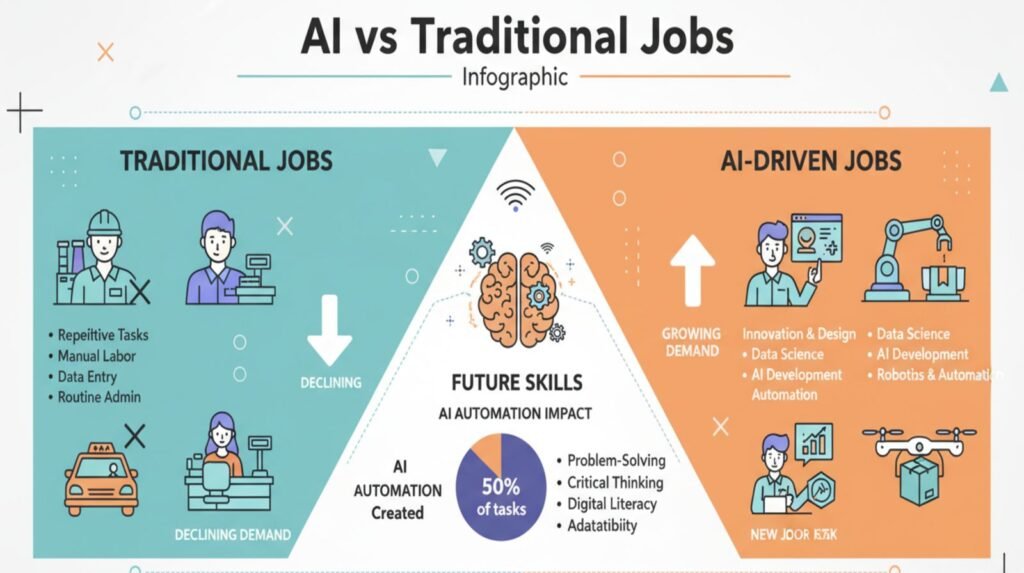
The landscape of employment is rapidly evolving, driven by technological advancements and the integration of artificial intelligence (AI) into various sectors. Understanding the dynamics of AI vs Traditional Jobs is crucial for students and educators alike. As AI continues to reshape the job market, it is essential to grasp how these changes may affect future career opportunities and the skills required to thrive in this new environment.
Introduction to AI vs Traditional Jobs
The debate surrounding AI vs Traditional Jobs centers on how automation and AI technologies are transforming the workforce. Traditional jobs have long been the backbone of economies, providing stability and a clear career path. However, with the rise of AI, many roles are being redefined or replaced, prompting students to reassess their career choices.
This blog aims to provide insights into the implications of AI on employment, the characteristics of traditional jobs, and the emerging trends that students should be aware of as they plan their futures.
Understanding AI and Its Impact on Employment
AI encompasses a range of technologies designed to perform tasks that typically require human intelligence. From machine learning to natural language processing, AI is increasingly capable of handling complex processes, leading to significant changes in various industries.
Many businesses report that AI can significantly improve efficiency and reduce costs, which often translates to a shift in employment patterns. While AI can create new job opportunities, it also poses a risk of job displacement in sectors heavily reliant on routine tasks. Understanding the impact of AI on jobs is vital for students as they navigate their career paths.
As AI continues to advance, students must recognize that certain traditional roles may become obsolete, while new positions requiring a blend of technical and soft skills will emerge. This shift necessitates a proactive approach to career planning and skill development.
Traditional Jobs: Stability and Challenges
Traditional jobs have historically offered a sense of stability and predictability. These roles often come with clear career trajectories and established paths for advancement. However, they also face challenges in the face of technological disruption.
One of the main challenges is the increasing automation of tasks that were once the domain of human workers. Many traditional job roles, particularly those involving repetitive tasks, are at risk of being replaced by AI technologies. This reality highlights the importance of adaptability and continuous learning for students entering the job market.
Despite these challenges, traditional jobs still hold value. Many industries, such as healthcare, education, and skilled trades, continue to require human expertise and interpersonal skills. Understanding the balance between AI vs Traditional Jobs will help students make informed decisions about their career paths.
Emerging Career Trends in the Age of AI
As AI reshapes the job market, several emerging career trends are becoming apparent. Students should be aware of these trends to position themselves effectively for future opportunities.
- AI-Specialized Roles: With the growth of AI technologies, there is a rising demand for professionals skilled in AI development, data analysis, and machine learning. Careers in AI are not just limited to technical roles; they also encompass positions in ethics, policy-making, and AI strategy.
- Hybrid Roles: Many traditional jobs are evolving into hybrid roles that require a combination of human and AI skills. For example, marketing professionals now need to understand data analytics and AI-driven marketing tools to remain competitive.
- Creative and Emotional Intelligence Roles: Fields that require creativity, empathy, and emotional intelligence, such as healthcare, education, and the arts, are likely to remain resilient in the face of AI advancements. Students should consider these sectors as they plan their careers.
- Entrepreneurial Opportunities: The rise of AI also opens doors for entrepreneurship. Students with innovative ideas can leverage AI to create new products and services, tapping into markets that did not previously exist.
Understanding these emerging trends will enable students to align their skills and interests with the evolving job landscape.
Skills Students Need for Future Careers
To thrive in a job market increasingly influenced by AI, students must develop a diverse skill set. Here are some essential skills for the future that students should focus on:
- Technical Skills: Proficiency in data analysis, programming, and understanding AI technologies will be crucial. Students should consider courses in computer science, data science, and related fields.
- Critical Thinking and Problem-Solving: As AI takes over routine tasks, the ability to think critically and solve complex problems will be invaluable. Students should engage in activities that enhance these skills, such as group projects and case studies.
- Emotional Intelligence: The ability to understand and manage emotions will become increasingly important, especially in roles that require interpersonal interaction. Students can develop emotional intelligence through teamwork, leadership roles, and communication exercises.
- Adaptability and Lifelong Learning: The job market will continue to evolve, making adaptability a key trait for success. Students should cultivate a mindset of lifelong learning, staying informed about industry trends and continuously updating their skills.
By focusing on these skills, students can prepare themselves for a dynamic and competitive job market.
Preparing for a Hybrid Job Market
As the job market transitions to a hybrid model that combines elements of AI vs Traditional Jobs, students must take proactive steps to prepare for this new reality. Here are some strategies to consider:
- Internships and Practical Experience: Gaining real-world experience through internships or part-time jobs can provide valuable insights into how AI is impacting various industries. Students should seek opportunities that allow them to apply their skills in practical settings.
- Networking: Building a professional network is essential for career growth. Students should attend industry events, join relevant organizations, and connect with professionals in their fields of interest.
- Continuous Education: Students should consider pursuing additional certifications or courses that align with emerging trends in their chosen industries. Online platforms offer a wealth of resources for skill development.
- Stay Informed: Keeping up with industry news, technological advancements, and labor market trends will help students make informed career decisions. Subscribing to relevant publications and following thought leaders on social media can be beneficial.
By adopting these strategies, students can position themselves for success in the evolving job market.
Conclusion: Embracing Change in Career Planning
The discussion of AI vs Traditional Jobs highlights the transformative impact of technology on the workforce. As AI continues to advance, students must be proactive in adapting to these changes and preparing for future career opportunities.
By understanding the implications of AI on employment, recognizing emerging trends, and developing essential skills, students can navigate the complexities of the job market with confidence. Embracing change and remaining adaptable will be key to achieving success in an AI-driven world.
Next step To further explore the impact of AI on jobs and discover essential skills for the future, consider diving into resources that provide insights into career opportunities in this evolving landscape. Stay informed and proactive in your career planning to ensure a successful future