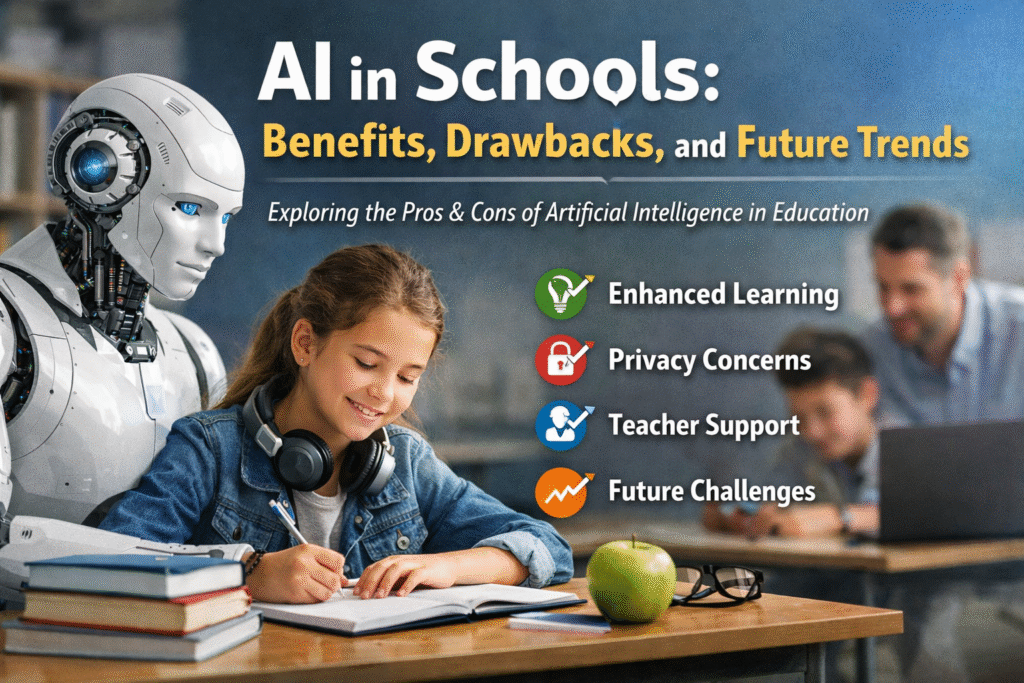
The integration of AI in schools is reshaping modern education, offering innovative tools to support teaching and learning. As classrooms evolve, educators, administrators, and parents are evaluating whether AI should serve as a learning assistant or if it risks creating dependency among students. This discussion is crucial for shaping the future of education in India and beyond.
What is an AI Learning Assistant?
An AI learning assistant refers to software or tools powered by artificial intelligence designed to support educational processes. These systems can adapt to individual student needs, provide instant feedback, and assist teachers in managing classroom activities. Unlike traditional digital
tools, AI assistants use machine learning to improve their responses over time, making them more effective with continued use. In the context of AI in education these assistants can take various forms, from chatbots that answer student queries to platforms that analyze learning patterns and recommend personalized content. The goal is to enhance the educational experience without replacing the essential role of human educators.
Benefits of AI in Schools
The adoption of AI in schools
brings numerous advantages that can transform teaching and learning experiences. These benefits range from personalized instruction to increased engagement, helping educators address diverse student needs more effectively.
Enhanced Personalized Learning
One of the most significant benefits of AI in classrooms is the ability to deliver personalized learning experiences. AI systems can analyze individual student performance, identify strengths and weaknesses, and tailor content to suit each learner’s
pace. This approach ensures that students receive the support they need, whether they require additional practice or more challenging material.
Personalized learning with AI allows educators to focus on guiding students rather than spending excessive time on administrative tasks. By automating assessments and progress tracking, teachers can dedicate more attention to fostering critical thinking and creativity in the classroom.
Improved Student Engagement
AI tools can make learning more interactive and engaging for students. Through gamified lessons, virtual simulations, and adaptive content, AI learning assistants capture student interest and maintain motivation. These tools often provide immediate feedback, helping learners understand concepts quickly and correct mistakes in real-time. Engagement is particularly important in subjects where students traditionally struggle. AI can
present complex ideas in accessible ways, using multimedia and interactive elements to simplify challenging topics. This not only improves comprehension but also encourages a positive attitude toward learning.
Drawbacks and Ethical Concerns
While the benefits are compelling, the integration of AI in schools also raises important concerns. Potential drawbacks include over-reliance on technology, privacy issues, and ethical considerations that must be addressed to ensure responsible use.
Dependency on AI Tools
A primary concern with AI dependency in learning is that students may become overly reliant on technology for problem-solving and critical thinking. If AI tools provide answers too readily, learners might skip the process of grappling with concepts themselves, which is essential for deep understanding. Dependency can also affect teachers, who might lean too heavily on AI for lesson planning and assessment, potentially diminishing their professional skills. Balancing AI support with traditional teaching methods is crucial to prevent such dependency and maintain the human element in education.
Privacy and Ethical Issues
The use of AI in education involves collecting and analyzing vast amounts of student data, raising significant privacy concerns. Schools must ensure that data is handled securely and used ethically, with clear policies to protect sensitive information. Additionally, AI algorithms can sometimes reflect biases present in their training data, leading to unfair outcomes for certain student groups. Ethical considerations also include ensuring equitable access to AI tools. Not all schools or students may have the resources to benefit from these technologies, potentially widening the educational gap. Addressing these issues is essential for the fair and responsible implementation of AI in schools.
Balancing AI with Traditional Teaching
Finding the right balance between AI and traditional teaching methods is key to maximizing benefits while minimizing drawbacks. AI should complement, not replace, the role of educators. Teachers bring empathy, creativity, and contextual understanding that AI cannot replicate.
Effective integration involves using AI for repetitive tasks, data analysis, and personalized support, allowing teachers to focus on fostering critical thinking, collaboration, and social skills. Professional development for educators is crucial, ensuring they are equipped to use AI tools effectively and ethically.
Collaboration between technologists, educators, and policymakers can help create frameworks that support balanced AI adoption. By prioritizing human-centered design, schools can harness the power of AI without losing the essential qualities of traditional education.
Case Studies: AI Success in Classrooms
Several schools and educational institutions have successfully integrated AI, demonstrating its potential to enhance learning. For example, some schools use AI-powered platforms to provide real-time feedback on assignments, helping students improve their work continuously. Others employ chatbots to answer common student questions, freeing up teachers for more complex interactions. These case studies highlight the importance of thoughtful implementation. Success often depends on clear goals, adequate training, and ongoing evaluation. By learning from these examples, educators can adopt strategies that work best for their specific contexts and needs.
Preparing for an AI-Driven Future
As AI in education continues to evolve, schools must prepare for a future where technology plays an increasingly significant role. This involves updating curricula to include digital literacy, critical thinking, and ethical reasoning related to AI use. Students need to understand both the capabilities and limitations of AI to become informed users and creators of technology. Investing in infrastructure and teacher training is essential for sustainable integration. Schools should also engage with parents and communities to build understanding and support for A initiatives. By taking a proactive approach, educators can ensure that AI serves as a valuable tool rather than a disruptive force.
Conclusion: Finding the Right Balance
The debate over AI in schools is not about choosing between technology and tradition but finding a harmonious balance. AI offers powerful tools to enhance personalized learning, engagement, and efficiency, but it must be implemented with care to avoid dependency and ethical pitfalls. Educators, administrators, and policymakers must work together to create guidelines that promote responsible AI use. By prioritizing student well-being and educational goals, schools can harness the benefits of AI while preserving the irreplaceable human touch in education.