Understanding the Role of ChatGPT & AI Assistants in Student Learning
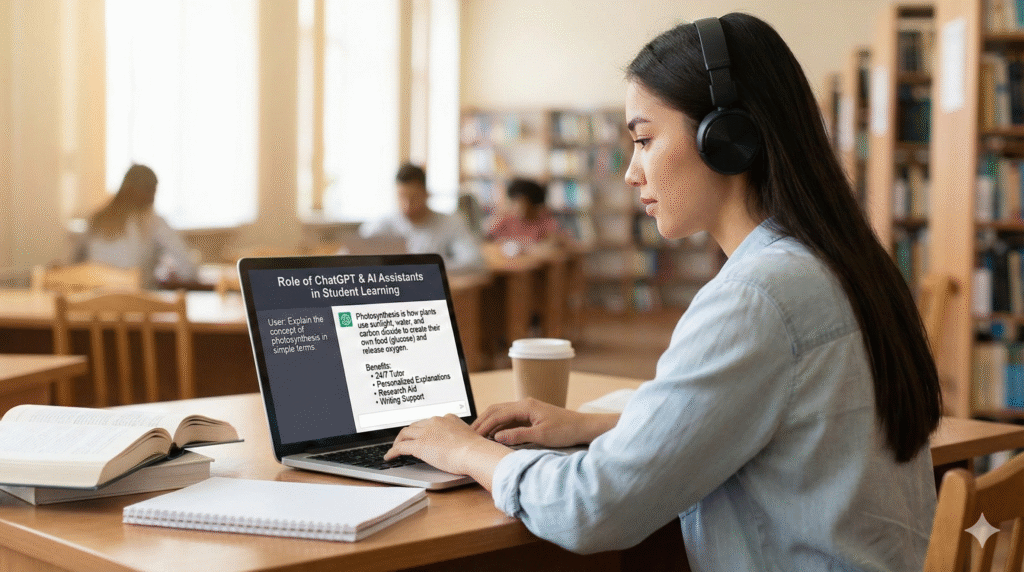
ChatGPT and AI assistants are revolutionizing education by providing personalized, on-demand learning support to students worldwide. These intelligent tools leverage natural language processing to answer questions, explain complex concepts, and offer tailored guidance. AI assistants serve as 24/7 tutors, making quality education accessible beyond traditional classroom boundaries while ChatGPT enables interactive, conversational learning experiences that adapt to individual student needs and learning styles.
The Educational Revolution Through AI Technology
The integration of ChatGPT in education represents a fundamental shift in how students access knowledge and develop skills. Traditional learning environments often struggle with limited teacher availability, varied student pacing, and resource constraints. AI assistants for students address these challenges by offering scalable, personalized support that complements human instruction rather than replacing it.
Modern educational institutions increasingly recognize that AI in education isn’t just a technological novelty—it’s becoming an essential component of effective learning ecosystems. From elementary schools to universities, educators are discovering how these tools can enhance engagement, improve comprehension, and foster independent learning habits among students.
The transformation extends beyond simple question-answering. AI-powered learning tools now facilitate critical thinking, problem-solving, and creative exploration. They provide scaffolded support that helps students build confidence while tackling challenging material, creating a learning environment where failure becomes a stepping stone rather than a roadblock.
Personalized Learning at Scale
One of the most significant advantages of ChatGPT and similar technologies is their ability to deliver personalized instruction to every student simultaneously. Unlike traditional classrooms where teachers must divide attention among dozens of students, AI assistants can engage with unlimited learners concurrently, each receiving customized responses based on their unique questions and comprehension levels.
This personalization manifests in multiple ways. When a student struggles with algebraic equations, the AI can offer step-by-step explanations, alternative problem-solving approaches, and practice exercises tailored to that specific challenge. For language learners, AI assistants provide conversation practice, grammar corrections, and vocabulary building exercises adapted to proficiency levels.
The adaptive nature of these tools means they learn from student interactions. If a learner consistently struggles with certain concepts, the AI can adjust its explanatory approach, offer additional resources, or break down information into smaller, more digestible segments. This responsiveness creates a learning experience that evolves with the student rather than following a rigid, predetermined path.
Instant Feedback and Continuous Support
The availability of AI assistants for students eliminates the frustrating waiting periods that traditionally plagued homework help and assignment clarification. Students can receive immediate feedback on their work, understand mistakes in real-time, and correct misconceptions before they become ingrained habits.
This instant support proves particularly valuable during study sessions outside school hours. When tackling homework late at night or preparing for exams during weekends, students no longer face the choice between struggling alone or waiting until the next class session. ChatGPT in education provides a safety net that ensures learning momentum continues uninterrupted.
The feedback extends beyond simple right-or-wrong evaluations. AI-powered learning tools can explain why an answer is incorrect, suggest alternative approaches, and guide students toward discovering solutions independently. This Socratic method of questioning and guiding, rather than simply providing answers, develops critical thinking skills essential for long-term academic success.
Enhancing Research and Information Literacy

Research projects and essay writing receive significant enhancement through AI in education technologies. Students can use these tools to brainstorm ideas, organize thoughts, outline arguments, and refine their writing. The conversational interface makes the research process less intimidating, particularly for students who struggle with traditional library databases or academic search engines.
However, this capability also introduces important educational considerations. Institutions must teach students to use ChatGPT and similar tools responsibly—as research assistants rather than ghostwriters. The goal is developing information literacy skills: learning to evaluate AI-generated content critically, verify sources, synthesize information from multiple perspectives, and create original work that reflects genuine understanding.
When used appropriately, these technologies teach students how to formulate effective questions, assess answer quality, and iterate toward deeper comprehension. These metacognitive skills prove valuable far beyond academic settings, preparing students for professional environments increasingly integrated with AI technologies.
Supporting Diverse Learning Needs
AI assistants demonstrate remarkable effectiveness in supporting students with diverse learning needs and abilities. For students with learning disabilities, language processing differences, or attention challenges, these tools offer patient, judgment-free assistance that adapts to individual requirements without stigma or frustration.
Visual learners can request diagram descriptions or conceptual visualizations. Students with reading difficulties can engage through conversational interfaces that feel less intimidating than dense textbooks. Those with anxiety about asking questions in class find a comfortable space to explore topics without fear of embarrassment.
International students and English language learners particularly benefit from AI-powered learning tools that can explain concepts in simpler language, provide translations, and offer cultural context that bridges understanding gaps. This accessibility democratizes education, ensuring that language barriers don’t limit academic potential.
Developing Digital Literacy and Future Skills
Engaging with ChatGPT in education inherently builds digital literacy competencies essential for 21st-century success. Students learn to interact effectively with AI systems, understand their capabilities and limitations, and develop critical evaluation skills necessary in an increasingly automated world.
These experiences teach students important lessons about information verification, algorithmic bias, and the importance of human judgment. They learn that AI assistants are tools that augment rather than replace human intelligence—a crucial distinction as they prepare for careers where collaboration with intelligent systems becomes standard practice.
Educational institutions incorporating these technologies position students advantageously for future workplaces. Understanding how to leverage AI effectively, communicate requirements clearly to automated systems, and integrate AI outputs into human decision-making processes are becoming foundational professional competencies.
Challenges and Considerations
While AI in education offers tremendous benefits, implementation requires thoughtful consideration of potential challenges. Academic integrity concerns arise when students misuse tools to complete assignments without genuine learning. Educators must establish clear guidelines distinguishing between appropriate assistance and academic dishonesty.
Over-reliance on AI assistants for students can potentially inhibit development of independent problem-solving skills if not properly balanced with traditional learning methods. Students need opportunities to struggle productively with challenging material, developing resilience and persistence alongside knowledge acquisition.
Privacy considerations also matter. Educational institutions must ensure that student interactions with AI-powered learning tools protect sensitive information and comply with data protection regulations. Transparency about data usage and storage helps build trust among students, parents, and educators.
The Future of AI-Enhanced Education
The role of ChatGPT and AI assistants in student learning continues expanding as technologies advance and pedagogical approaches evolve. Future developments promise even more sophisticated personalization, multimodal learning experiences combining text, audio, and visual elements, and deeper integration with formal curriculum structures.
The most successful educational models will likely blend human instruction with AI support, leveraging each’s unique strengths. Teachers provide mentorship, motivation, social-emotional support, and nuanced judgment that AI cannot replicate, while technology handles scalable personalization, immediate feedback, and tireless availability.
As we navigate this educational transformation, the focus must remain on enhancing human potential rather than replacing human connection. AI in education succeeds best when it amplifies teachers’ impact and empowers students to achieve their full potential through accessible, personalized, and engaging learning experiences.