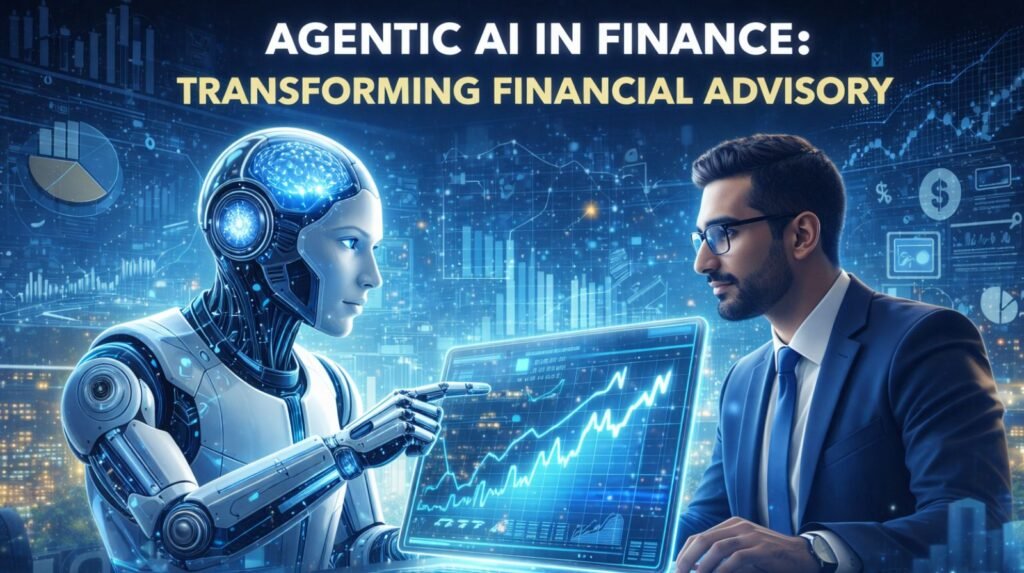
The financial industry is undergoing a significant transformation with the emergence of . This advanced technology is not only reshaping how financial services operate but also raising questions about the future roles of financial advisors. As we look towards 2030, it’s essential to explore the implications of Agentic AI on financial advisory services, its current applications, and the evolving landscape of trust, ethics, and human judgment in financial decision-making.
Understanding Agentic AI in Finance
Agentic AI refers to systems that can operate autonomously, making decisions without human intervention. In finance, this translates to AI systems that can analyze vast amounts of data, assess risks, and execute transactions. The shift from traditional AI, which serves primarily as a tool for analysis, to Agentic AI, which acts as an executor of financial decisions, is significant.
Recent data shows that by 2026, the adoption of Agentic AI is expected to rise significantly, with many financial institutions integrating these systems into their operations. These autonomous decision-makers can enhance efficiency in processes such as loan approvals, fraud detection, and portfolio optimization. For instance, banks are increasingly utilizing AI to automate loan approvals, reducing the time taken from days to mere hours.
Real-World Use Cases of Agentic AI
- : Many banks are using AI algorithms to evaluate creditworthiness. For example, a fintech company recently reported that their AI system could process loan applications with 95% accuracy, significantly reducing human error and increasing approval speed.
- : Financial institutions are deploying AI to monitor transactions in real-time, identifying suspicious activities. A leading bank noted a 30% reduction in fraudulent transactions after implementing an AI-driven fraud detection system.
- : Wealth management firms are leveraging AI to optimize investment portfolios based on real-time market data. This approach allows for more dynamic investment strategies, catering to the evolving needs of clients.
Current Applications of AI in Financial Services
AI is already making waves in various areas of financial services. The use of AI financial advisors is becoming more prevalent, providing personalized financial advisory services to clients. These AI systems analyze individual client data and market trends to offer tailored advice.
Personalized Financial Advisory
AI systems can analyze large datasets to deliver personalized recommendations. For instance, a recent study indicated that clients who utilized AI-driven financial advisory services reported higher satisfaction levels due to the customized insights provided.
AI in Banking
In banking, AI is streamlining operations and enhancing customer experiences. From chatbots providing instant customer service to AI systems predicting customer needs, the integration of AI is transforming the banking landscape.
Fintech AI Systems
Fintech companies are at the forefront of adopting AI technologies. Many startups are developing innovative solutions that harness AI for various financial applications, including budgeting tools and investment platforms that adapt to user behavior.
The Shift from AI as a Tool to AI as an Executor
The transition from AI as a mere tool to an executor of financial decisions marks a pivotal moment in the industry. This shift raises questions about the role of human advisors and the potential for AI to fully replace them.
Advantages of AI Execution
- : AI can process information and execute decisions far quicker than humans. Financial institutions that adopt these systems can expect faster transaction times and improved operational efficiency.
- : AI systems leverage data analytics to make informed decisions, reducing the likelihood of human error. This capability is particularly beneficial in high-stakes environments where precision is crucial.
- : By automating routine tasks, financial firms can reduce overhead costs associated with human labor, allowing them to allocate resources more effectively.
Challenges of AI Execution
However, the transition is not without challenges. The reliance on AI systems raises concerns about accountability and transparency. Financial advisors play a crucial role in interpreting complex data and providing context to clients, something that AI may struggle to replicate fully.
Impact on Traditional Financial Advisors
The rise of Agentic AI is reshaping the role of traditional financial advisors. While some fear that AI will render their roles obsolete, others see it as an opportunity to enhance their services.
Evolving Roles of Financial Advisors
- : Financial advisors can leverage AI tools to provide more informed advice. By using AI to analyze data, advisors can focus on strategic planning and client relationship management.
- : As AI becomes more prevalent, financial advisors will need to educate clients on how these systems work and their implications for financial decision-making.
- : Advisors can position themselves as trusted partners in navigating the complexities of AI in finance, ensuring clients feel secure in their financial choices.
The Future of Financial Advisory
As we approach 2030, the financial advisory landscape will likely consist of a hybrid model where AI and human advisors work in tandem. This collaboration can lead to improved outcomes for clients, combining the efficiency of AI with the empathy and understanding that only human advisors can provide.
Trust, Ethics, and Regulatory Challenges
The integration of Agentic AI in finance brings forth significant trust and ethical considerations. As AI systems make more autonomous decisions, the need for transparency and accountability becomes paramount.
Building Trust in AI Systems
Trust in AI systems is essential for widespread adoption. Financial institutions must ensure that their AI models are transparent and explainable. Clients need to understand how decisions are made and the data that drives these conclusions.
Ethical Concerns
Ethical concerns surrounding AI in finance include issues of bias in decision-making and the potential for job displacement. It is crucial for financial institutions to implement ethical guidelines and ensure that AI systems are designed to be fair and equitable.
Regulatory Challenges
Regulatory frameworks will need to evolve to address the complexities introduced by AI. Financial regulators must establish guidelines that ensure AI systems operate within ethical boundaries and maintain consumer protection.
The Role of Human Judgment in AI-Driven Decisions
Despite the advancements in AI, human judgment remains a critical component of financial decision-making. Complex financial situations often require nuanced understanding and emotional intelligence, areas where AI still falls short.
Importance of Human Insight
Financial decisions are not solely based on data; they often involve understanding client emotions and preferences. Human advisors can provide insights that AI may overlook, ensuring that decisions align with clients’ values and goals.
Collaboration Between AI and Human Advisors
The future will likely see a collaborative approach where AI provides data-driven insights, and human advisors interpret these insights in the context of individual client needs. This synergy can enhance decision-making processes and improve client outcomes.
Future of the Financial Ecosystem by 2030
Looking ahead to 2030, the financial ecosystem will be significantly influenced by the continued evolution of Agentic AI. The landscape will likely feature a blend of AI-driven services and human expertise, creating a more efficient and responsive financial environment.
Predictions for 2030
- : By 2030, it is expected that the majority of financial institutions will have integrated AI systems into their operations, enhancing service delivery and operational efficiency.
- : As AI becomes more prevalent, ethical considerations will take center stage. Financial institutions will prioritize ethical AI practices to build trust with clients.
- : The advisory landscape will likely consist of hybrid models where AI tools support human advisors, creating a more personalized and effective financial advisory experience.
Conclusion
Agentic AI in Finance is poised to transform the financial advisory landscape dramatically by 2030. While concerns about job displacement and ethical implications exist, the collaboration between AI and human advisors can lead to enhanced client outcomes. Financial professionals must adapt to this AI-driven transformation, embracing the opportunities it presents while navigating the challenges ahead. As the financial ecosystem evolves, those who can leverage the strengths of both AI and human judgment will thrive in the new era of finance.