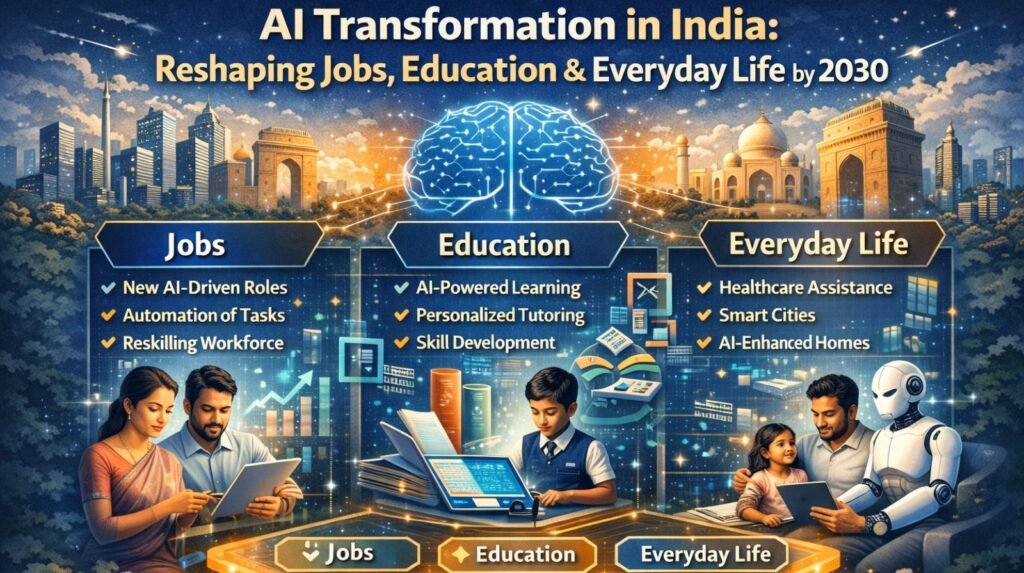
The AI transformation in India is poised to have profound implications across various sectors, including jobs, education, and everyday life. As we approach 2030, the integration of artificial intelligence into our daily routines and professional landscapes will not only redefine how we work but also how we learn and interact with technology. This blog will explore the multifaceted impact of AI transformation in India, highlighting the changes that business owners, educators, policymakers, and students should anticipate.
Introduction to AI Transformation in India
India stands at the threshold of a significant technological revolution driven by AI. With a rapidly growing digital infrastructure and a young, tech-savvy population, the country is uniquely positioned to harness the potential of AI. The AI transformation in India is not just about adopting new technologies; it is about rethinking traditional processes and systems to enhance efficiency and productivity.
As businesses increasingly adopt AI-driven solutions, the need for a workforce skilled in these technologies will surge. This shift will necessitate a reevaluation of current educational frameworks to ensure that future generations are equipped with the necessary skills to thrive in an AI-driven economy.
Impact of AI on Jobs
The impact of AI on jobs is one of the most discussed aspects of the AI transformation in India. While there are concerns about job displacement due to automation, many experts believe that AI will also create new job opportunities. The key lies in understanding which sectors will be affected and how businesses can adapt to these changes.
Job Displacement vs. Job Creation
Many businesses report that AI can significantly improve operational efficiency, leading to the automation of routine tasks. This shift may displace some jobs, particularly in manufacturing and administrative roles. However, AI is also expected to create new roles in areas such as data analysis, AI system management, and digital marketing.
Reskilling and Upskilling
To mitigate the effects of job displacement, there is a growing emphasis on reskilling and upskilling the workforce. Companies are increasingly investing in training programs to help employees transition into new roles that require AI-related skills. This proactive approach is essential for ensuring that the workforce remains competitive in the evolving job market.
AI in Education: Reshaping Learning
The integration of AI in education is another critical aspect of the AI transformation in India. AI technologies are being utilized to personalize learning experiences, making education more accessible and effective.
Personalized Learning Experiences
AI can analyze individual learning patterns and adapt educational content accordingly. This personalization helps students grasp complex concepts at their own pace, fostering a more engaging learning environment. Many educational institutions are beginning to implement AI-driven tools that provide tailored resources to students based on their unique needs and abilities.
Teacher Support and Administrative Efficiency
AI is not only beneficial for students; it also supports educators by automating administrative tasks. This allows teachers to focus more on instruction and student engagement. Additionally, AI can assist in identifying students who may need extra help, enabling timely interventions to improve learning outcomes.
AI in Everyday Life: Enhancements and Challenges
As AI becomes more integrated into daily life, its impact on society will be profound. From smart home devices to AI-driven customer service, the AI transformation in India is enhancing convenience and efficiency in various aspects of life.
Enhancements in Daily Activities
AI applications in everyday life are already visible through virtual assistants, recommendation systems, and smart appliances. These technologies simplify tasks, streamline processes, and provide personalized experiences. For instance, AI can help individuals manage their schedules, optimize their shopping experiences, and even enhance their health and wellness through personalized recommendations.
Challenges and Ethical Considerations
Despite the benefits, the widespread adoption of AI also presents challenges. Issues such as data privacy, ethical use of AI, and the digital divide must be addressed to ensure that the benefits of AI are equitably distributed. Policymakers and businesses must work together to create frameworks that promote responsible AI use while protecting individuals’ rights.
Future of Work in India: Skills in Demand
The AI transformation in India will fundamentally change the skills required in the workforce. As AI technologies evolve, so too will the demand for specific skill sets.
Critical Skills for the AI Era
Skills such as data literacy, programming, and critical thinking will become increasingly valuable. Business owners and educators must collaborate to ensure that training programs align with the evolving needs of the job market. Emphasizing STEM (science, technology, engineering, and mathematics) education will be crucial in preparing the next generation for the future of work.
Lifelong Learning and Adaptability
In an AI-driven economy, the concept of lifelong learning will gain prominence. Professionals will need to continuously update their skills to remain relevant. Organizations that foster a culture of continuous learning will be better equipped to navigate the challenges posed by technological advancements.
Government Policies Supporting AI Adoption
Government policies play a vital role in facilitating the AI transformation in India. By creating a conducive environment for AI development and implementation, policymakers can help drive innovation and economic growth.
Investment in Research and Development
The Indian government has recognized the importance of AI and is investing in research and development initiatives. Funding for AI research, partnerships with academic institutions, and support for startups in the AI space are crucial steps toward fostering a vibrant AI ecosystem.
Regulatory Frameworks
Establishing clear regulatory frameworks is essential for addressing the challenges associated with AI adoption. These frameworks should focus on data privacy, ethical AI use, and promoting transparency in AI algorithms. By doing so, the government can build trust among citizens and encourage broader acceptance of AI technologies.
Conclusion: Preparing for an AI-Driven Future
The AI transformation in India presents both opportunities and challenges. As we move toward 2030, it is imperative for business owners, educators, and policymakers to collaborate in shaping a future that harnesses the potential of AI while addressing its challenges.
By investing in education, promoting reskilling initiatives, and creating supportive policies, India can position itself as a leader in the global AI landscape. As individuals, we must also embrace the changes brought about by AI and actively participate in this transformation.
What is AI transformation in India?
AI transformation in India refers to the integration of artificial intelligence technologies across various sectors, impacting jobs, education, and daily life.
How will AI impact jobs in India?
AI is expected to automate certain tasks, potentially displacing jobs, but it will also create new opportunities in fields related to AI development and management.
What role does AI play in education?
AI enhances education by personalizing learning experiences, automating administrative tasks, and providing insights to educators about student performance.
What are the challenges of AI adoption in India?
Challenges include data privacy concerns, ethical considerations, and ensuring equitable access to AI technologies across different segments of society.
How can individuals prepare for an AI-driven future?
Individuals can prepare by embracing lifelong learning, developing critical skills related to AI, and staying informed about technological advancements.