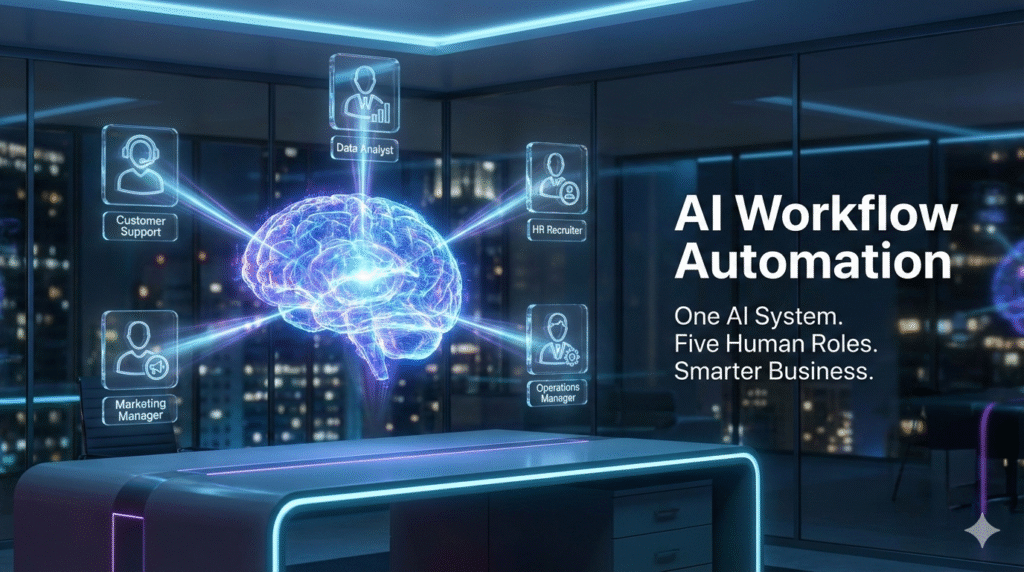
The modern workplace is experiencing a seismic shift as businesses embrace AI workflow automation to streamline operations and maximize efficiency. What once required a team of five specialized professionals can now be accomplished by a single intelligent system. This transformation isn’t about replacing humans—it’s about augmenting capabilities, reducing costs, and allowing teams to focus on strategic initiatives that truly require human creativity and judgment.
According to recent industry research, companies implementing artificial intelligence automation solutions report up to 40% reduction in operational costs and 60% faster task completion rates. As we navigate 2026, understanding how to leverage these systems has become essential for businesses looking to maintain competitive advantage.
Understanding AI Workflow Automation
AI workflow automation represents the integration of machine learning, natural language processing, and intelligent process automation to handle complex, multi-step business tasks that traditionally required human intervention. Unlike basic automation tools that follow rigid, pre-programmed rules, these intelligent automation systems can learn, adapt, and make decisions based on context and historical data.
Modern AI-powered workflow tools combine several technologies:
- Machine learning algorithms that improve performance over time
- Natural language processing for document analysis and communication
- Computer vision for image and video processing
- Robotic process automation for repetitive tasks
- Predictive analytics for decision-making support
The Five Human Roles Being Consolidated
1. Data Entry Specialist
Traditional data entry roles consume countless hours transferring information between systems, updating databases, and maintaining records. AI automation software now extracts data from emails, PDFs, forms, and images with 99.5% accuracy, automatically populating CRM systems, spreadsheets, and databases. These workflow automation solutions work 24/7 without fatigue, processing thousands of records in minutes while flagging anomalies for human review.
2. Customer Service Representative
AI-powered chatbots and virtual assistants have evolved beyond simple FAQ responses. Modern business process automation systems understand context, sentiment, and intent, resolving up to 80% of customer inquiries without human intervention. They seamlessly escalate complex issues to human agents while maintaining conversation history and customer context. These systems handle multi-channel support across email, chat, social media, and phone, providing consistent 24/7 service that learns from every interaction.
3. Administrative Coordinator
Scheduling meetings, managing calendars, processing expense reports, and coordinating team communications no longer require dedicated administrative staff. AI workflow automation platforms analyze participant availability, propose optimal meeting times, send invitations, book resources, and prepare agendas automatically. These automated workflow systems also handle travel arrangements, process invoices, track project deadlines, and generate status reports, freeing professionals to focus on higher-value activities.
4. Quality Assurance Analyst
Quality control across documents, code, products, and processes benefits tremendously from AI-driven automation. Machine learning models detect errors, inconsistencies, and deviations from standards faster and more accurately than human reviewers. Whether auditing financial documents, testing software code, or inspecting manufacturing output, these intelligent process automation tools maintain consistent quality standards while documenting issues and suggesting corrections in real-time.
5. Research and Analysis Assistant
Gathering information, analyzing trends, compiling reports, and generating insights from vast datasets traditionally required dedicated research staff. Modern AI workflow automation systems scan thousands of sources, extract relevant information, identify patterns, and generate comprehensive reports in minutes. These platforms use machine learning workflow optimization to understand which data sources are most valuable, continuously refining their research methodologies based on user feedback and outcomes.
How One AI System Replaces Multiple Roles
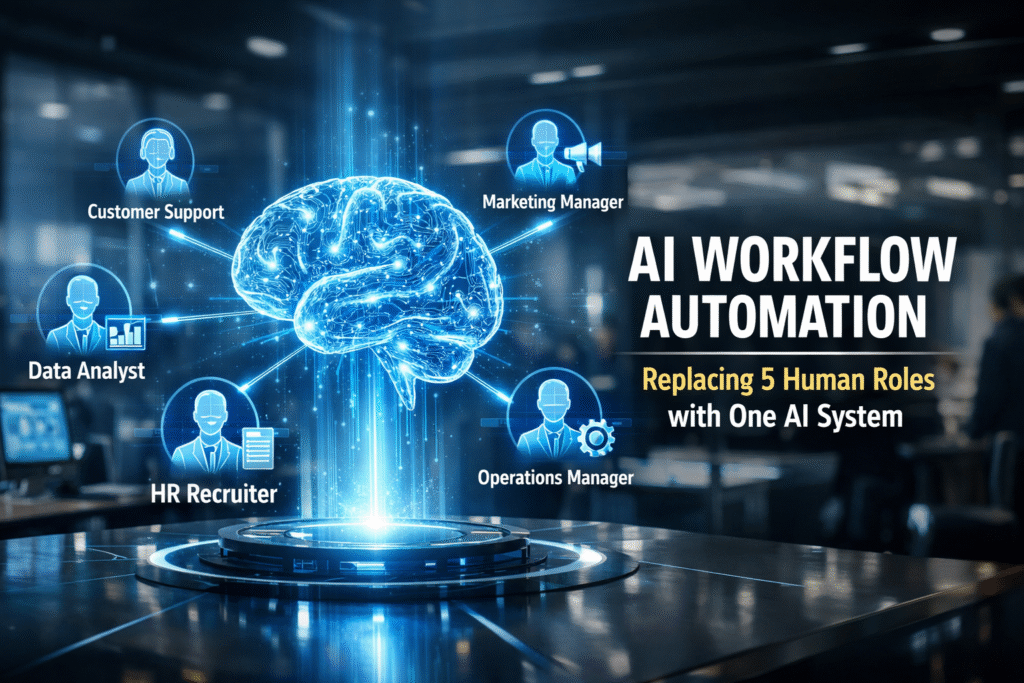
The power of modern AI workflow automation lies in integration and orchestration. Rather than deploying separate tools for each function, leading platforms offer unified systems that handle all five roles through interconnected modules. This integration creates exponential efficiency gains through seamless data flow and coordinated task execution.
Consider a typical business scenario: A customer inquiry arrives via email. The AI automation platform automatically extracts key information (data entry), analyzes the inquiry type and sentiment (customer service), schedules a follow-up if needed (administration), checks response quality against brand guidelines (quality assurance), and pulls relevant historical data and product information to inform the response (research). All this happens in seconds, without human intervention, while maintaining detailed logs for compliance and improvement.
These enterprise automation solutions achieve such comprehensive coverage through:
- Centralized data repositories eliminating duplicate entry
- API integrations connecting all business systems
- Workflow orchestration coordinating multi-step processes
- Continuous learning improving accuracy over time
- Exception handling routing complex cases to humans
Real-World Implementation and ROI
Companies implementing comprehensive AI workflow automation report transformative results. A mid-sized financial services firm reduced their operations team from 15 to 4 personnel while increasing processing capacity by 300%. A healthcare provider automated patient scheduling, records management, billing, and follow-up communications, cutting administrative costs by $2.4 million annually while improving patient satisfaction scores by 35%.
The implementation timeline for digital workflow automation varies by complexity, but most organizations achieve initial productivity gains within 60-90 days. The key to success involves thorough process mapping, phased rollout, continuous monitoring, and iterative refinement based on real-world performance data.
Return on investment typically breaks even within 6-12 months, after which savings compound. Beyond direct cost reduction, organizations gain competitive advantages through faster response times, improved accuracy, enhanced customer experiences, and freed capacity for innovation and growth initiatives.
Addressing Common Concerns About AI Automation
Many organizations hesitate to implement AI-powered automation due to concerns about job displacement, system reliability, and implementation complexity. However, evidence shows that successful deployments complement rather than replace human workers. Teams transition from repetitive task execution to strategic oversight, exception handling, and continuous improvement of automation systems.
Modern workflow automation platforms include robust error handling, audit trails, and human-in-the-loop capabilities ensuring critical decisions receive appropriate review. Security features including encryption, access controls, and compliance frameworks address data protection requirements across industries and regulations.
Implementation complexity has decreased significantly with cloud-based solutions, pre-built integrations, and low-code/no-code configuration tools. Many vendors offer managed services, training programs, and dedicated support ensuring smooth transitions and ongoing optimization.
Choosing the Right AI Workflow Automation Solution
Selecting the appropriate automation technology requires careful evaluation of business needs, existing systems, scalability requirements, and vendor capabilities. Key considerations include:
- Integration capabilities with current software ecosystem
- Scalability to handle growth and seasonal variations
- Customization flexibility for unique business processes
- Security and compliance certifications
- Vendor stability, roadmap, and support quality
- Total cost of ownership including licensing, implementation, and maintenance
Successful organizations typically begin with pilot projects in high-volume, well-defined processes, demonstrating value before expanding to more complex workflows. This approach builds organizational confidence, refines implementation methodology, and creates internal champions who drive broader adoption.
The Future of Work with AI Automation
AI workflow automation represents not just technological advancement but a fundamental reimagining of how work gets done. By consolidating five distinct roles into one intelligent system, organizations unlock unprecedented efficiency while enabling human workers to focus on creativity, strategy, and meaningful problem-solving that machines cannot replicate.
The question facing businesses today isn’t whether to adopt AI automation solutions, but how quickly they can implement these systems while maintaining organizational culture and employee engagement. Those who successfully navigate this transition will find themselves with competitive advantages that compound over time—faster operations, lower costs, higher quality, and teams focused on innovation rather than administration.
As artificial intelligence workflow tools continue evolving, early adopters will shape best practices, influence platform development, and establish market leadership in their industries. The transformation is underway—the only question is whether your organization will lead it or follow.