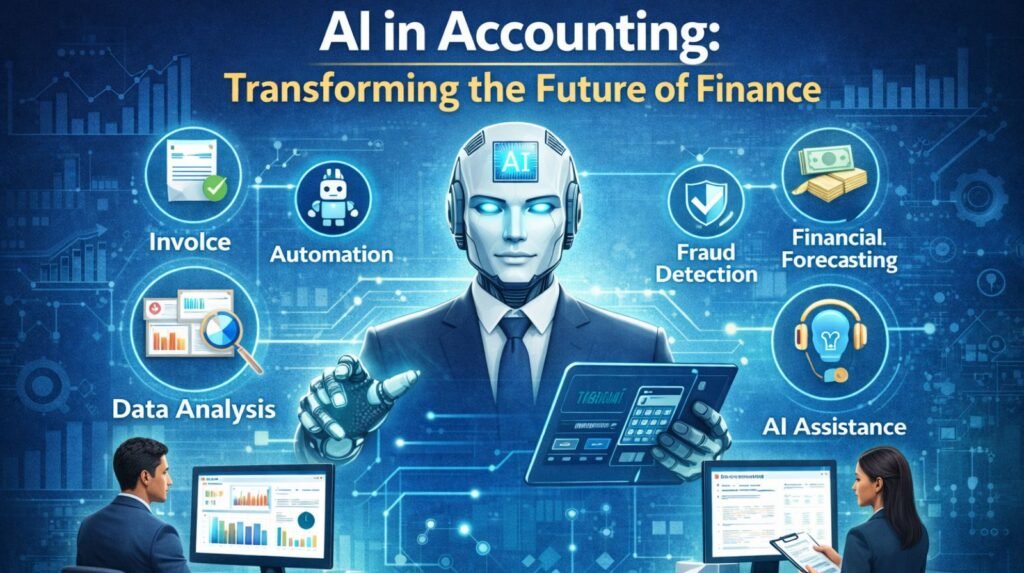
In recent years, AI in Accounting has emerged as a transformative force, reshaping how financial tasks are executed across various sectors. By 2026, AI is projected to automate up to 80% of routine tasks, including data entry, reconciliations, and basic audits. This shift not only enhances efficiency but also allows accountants to focus on more strategic roles. As Indian SMEs and accounting firms increasingly adopt these technologies, it’s crucial to understand how automation is changing the landscape of accounting.
Introduction to AI in Accounting
The integration of AI in Accounting practices is not just a trend; it is a necessity in today’s fast-paced financial environment. AI technologies are designed to improve accuracy, reduce manual labor, and provide insights that were previously unattainable. For instance, recent data shows that 87% of Indian enterprises are actively using AI solutions, highlighting a significant shift towards automation.
AI tools are now capable of automating various accounting functions, including bookkeeping, fraud detection, and financial forecasting. This evolution is particularly beneficial for Indian SMEs, which often face resource constraints. By leveraging AI, these businesses can optimize their accounting processes and remain competitive in the market.
The Benefits of AI in Accounting
- Increased Efficiency: AI can handle repetitive tasks at a faster rate than humans, allowing accountants to focus on higher-value work.
- Enhanced Accuracy: With AI’s ability to analyze large datasets, the risk of human error is significantly reduced.
- Cost Savings: Automation can lead to reduced operational costs, which is vital for SMEs looking to maximize their budgets.
The Role of AI in Bookkeeping
Bookkeeping is one of the primary areas where AI is making a substantial impact. Automated bookkeeping solutions can streamline data entry and reconciliation processes, ensuring that financial records are always up-to-date. By 2026, the trend towards automated bookkeeping is expected to continue, with many firms adopting [automated accounting software](https://asigyan.com) to enhance their operations.
Key Features of AI-Driven Bookkeeping
- Real-Time Data Processing: AI tools can process transactions in real-time, providing businesses with immediate insights into their financial status.
- Error Reduction: AI systems can detect inconsistencies in data, leading to a 99% reduction in errors related to invoice accuracy.
- Integration with Existing Systems: Many AI tools can seamlessly integrate with platforms like Tally ERP, making the transition to automated bookkeeping smoother for firms.
Case Study: Successful Implementation
A notable example is a medium-sized Indian SME that adopted AI-driven bookkeeping solutions. After implementing these tools, the company reported a 50% reduction in time spent on data entry and a significant increase in the accuracy of their financial reports. This allowed the finance team to focus on strategic planning rather than mundane tasks.
Enhancing Fraud Detection with AI
Fraud detection is another critical area where AI is proving invaluable. Traditional methods of fraud detection often rely on manual reviews, which can be time-consuming and prone to oversight. AI, on the other hand, can analyze patterns in financial data to identify anomalies that may indicate fraudulent activities.
How AI Improves Fraud Detection
- Pattern Recognition: AI algorithms can learn from historical data, allowing them to recognize unusual patterns that may signify fraud.
- Real-Time Alerts: Many AI systems can provide real-time alerts for suspicious transactions, enabling quicker responses to potential fraud.
- Comprehensive Analysis: AI can evaluate vast amounts of data from various sources, increasing the chances of detecting fraud before it escalates.
Example of AI in Action
In 2026, a prominent Indian accounting firm utilized AI to enhance its fraud detection capabilities. By implementing AI-driven analytics, the firm was able to reduce fraud detection times by 70%, significantly improving their overall risk management strategy. This case underscores the potential of AI to safeguard financial integrity.
Streamlining Invoice Processing through Automation
Invoice processing is often a bottleneck in financial operations. Manual processing can lead to delays, errors, and increased costs. However, AI can automate this process, making it faster and more efficient.
Benefits of Automated Invoice Processing
- Speed: AI can process invoices in seconds, drastically reducing the time required for approval and payment.
- Cost Efficiency: By minimizing manual intervention, businesses can save on labor costs associated with invoice processing.
- Improved Cash Flow Management: Faster invoice processing allows for better cash flow management, as payments can be made promptly.
Current Trends in Invoice Automation
Recent trends indicate that Indian SMEs are increasingly adopting AI tools for invoice processing. In 2026, it is expected that firms will prioritize automation solutions that integrate with existing accounting software to enhance efficiency and accuracy.
Financial Forecasting: The AI Advantage
Financial forecasting is another area where AI is making significant strides. Traditional forecasting methods often rely on historical data and manual calculations, which can be limiting. AI, however, can analyze vast datasets to provide more accurate and timely forecasts.
Advantages of AI in Financial Forecasting
- Data-Driven Insights: AI can analyze market trends, economic indicators, and internal data to generate more reliable forecasts.
- Scenario Analysis: AI tools can simulate various scenarios, helping businesses prepare for potential future challenges.
- Continuous Learning: As AI systems process more data, they improve their forecasting accuracy over time.
Case Study: Enhanced Forecasting with AI
An Indian financial services firm adopted AI for its forecasting needs in 2026. By leveraging AI-driven analytics, the firm improved its forecasting accuracy by 30%, enabling better strategic planning and resource allocation. This success highlights the transformative potential of AI in financial forecasting.
Current Trends in AI and Accounting
The landscape of AI in accounting is evolving rapidly. As of 2026, several key trends are shaping the future of the industry.
Increased Adoption of AI Tools
A significant trend is the shift from pilot programs to scaled adoption of AI technologies. According to recent data, 91% of Indian leaders are prioritizing the speed of AI deployment, recognizing its importance in maintaining competitive advantage.
Focus on Compliance Automation
AI tools are also transforming compliance processes, particularly in GST filing and tax compliance. By automating these tasks, firms can ensure they remain compliant with regulatory requirements while minimizing manual errors. Businesses can [understand GST compliance] better through these innovative tools.
Growth of the AI in Accounting Market
The Indian AI in accounting market is projected to grow at a CAGR of 26.54% between 2026 and 2033. This growth is driven by the increasing demand for automation in tax compliance, fraud detection, and real-time financial reporting.
Future of Accountants in an AI-Driven World
As AI in Accounting continues to evolve, the role of accountants will also change. Rather than being replaced, accountants will need to adapt to new technologies and take on more strategic roles within organizations.
Skills for the Future
Accountants will need to develop new skills to thrive in an AI-driven environment. This includes proficiency in AI tools, data analysis, and a deep understanding of financial strategy. Continuous learning and adaptation will be essential for success.
Embracing Change
The future of accountants lies in embracing AI and automation. By leveraging these technologies, accountants can enhance their value proposition, providing deeper insights and strategic guidance to their clients.
What is AI in accounting?
AI in accounting refers to the use of artificial intelligence technologies to automate and enhance various accounting processes, including bookkeeping, fraud detection, and financial forecasting.
How is AI used in accounting?
AI is used in accounting to automate routine tasks, improve accuracy, and provide insights through data analysis, enabling accountants to focus on strategic decision-making.
Will AI replace accountants?
AI is unlikely to replace accountants entirely. Instead, it will change their roles, allowing them to focus on higher-level tasks while automating repetitive functions.
Top AI tools for Indian CAs in 2026?
In 2026, popular AI tools for Indian Chartered Accountants include those that automate GST filing, financial forecasting, and real-time compliance checks.
Impact of AI on GST compliance in India?
AI significantly enhances GST compliance by automating filing processes and real-time reconciliation, reducing the risk of errors and improving compliance rates.