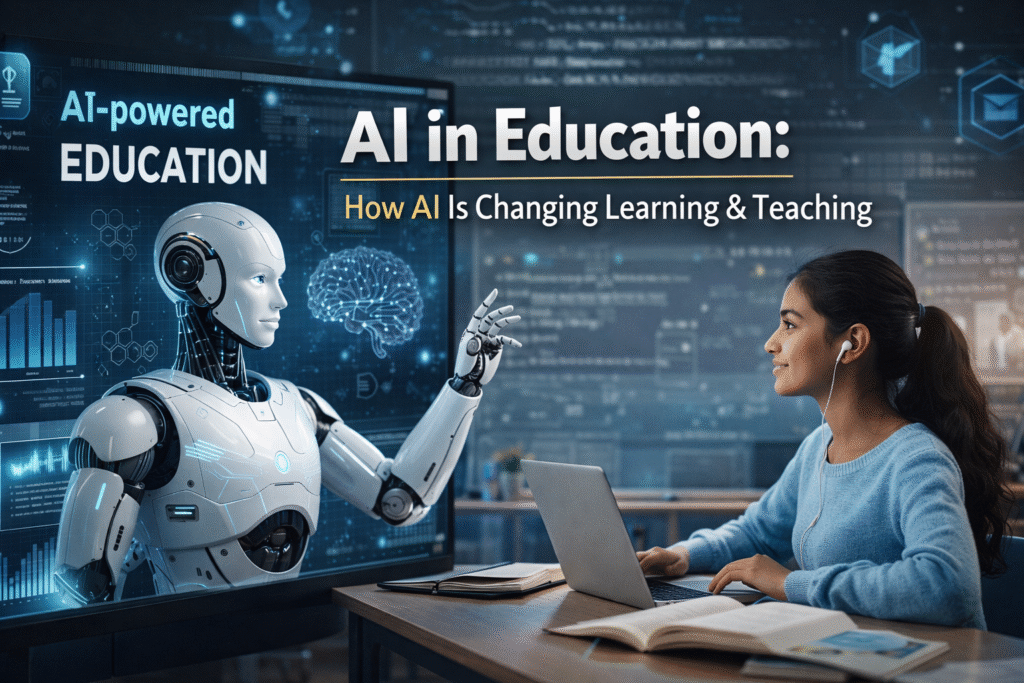
The education landscape is undergoing a revolutionary transformation, and artificial intelligence (AI) is at the forefront of this change. From personalized learning experiences to intelligent tutoring systems, AI is changing education in ways that were unimaginable just a decade ago. This comprehensive guide explores how AI in education is reshaping classrooms, empowering teachers, and creating unprecedented opportunities for learners worldwide.
What Is AI in Education?
AI in education refers to the application of artificial intelligence technologies to enhance teaching, learning, and educational administration. Educational AI encompasses machine learning algorithms, natural language processing, adaptive learning platforms, and intelligent systems designed to support both students and educators.
The role of AI in learning extends beyond simple automation. It involves creating intelligent systems that can understand student needs, adapt to different learning styles, and provide personalized educational experiences at scale. From virtual tutors to automated grading systems, AI-powered education tools are becoming integral to modern learning environments.
How AI Is Transforming the Classroom
AI transformation in education is manifesting in numerous practical applications that are redefining traditional classroom dynamics:
Personalized Learning Experiences represent one of the most significant impacts of AI on student learning. Traditional one-size-fits-all teaching methods are giving way to customized learning paths. AI-driven personalized learning systems analyze individual student performance, learning pace, and comprehension levels to create tailored educational content. Students who struggle with specific concepts receive additional support and alternative explanations, while advanced learners can progress at their own accelerated pace.
Intelligent Tutoring Systems provide AI-powered tutoring that’s available 24/7. These systems offer immediate feedback, answer questions, and guide students through complex problems. Unlike human tutors who can only work with one student at a time, AI tutors can simultaneously support thousands of learners, making quality tutoring accessible to everyone.
Automated Grading and Assessment is revolutionizing how teachers spend their time. AI grading systems can evaluate essays, short answers, and even creative work, providing instant feedback to students. This AI assessment in education doesn’t just save teachers countless hours—it provides students with immediate insights into their performance, allowing them to learn and improve faster.
Benefits of AI in Education
The advantages of AI in education are transforming outcomes for students, teachers, and educational institutions:
Enhanced Accessibility means AI for inclusive education is breaking down barriers for students with disabilities. Speech-to-text technology helps students with hearing impairments, while text-to-speech assists those with visual challenges. AI-powered assistive technology translates content into multiple languages, making quality education accessible to non-native speakers and creating truly inclusive learning environments.
Data-Driven Insights enable educators to make informed decisions. AI analytics in education track student progress, identify learning gaps, and predict potential challenges before they become serious problems. Teachers can use these insights to intervene early and provide targeted support where it’s needed most.
24/7 Learning Support through AI chatbots for education means students can get help whenever they need it. These intelligent assistants answer questions, provide resources, and guide students through learning materials outside traditional classroom hours, supporting the growing trend of self-paced learning with AI.
Reduced Teacher Workload allows educators to focus on what they do best—teaching and mentoring. By automating administrative tasks, grading, and routine questions, AI teacher assistance tools free up valuable time for educators to engage in meaningful interactions with students.
AI-Powered Learning Tools and Platforms
The market is witnessing an explosion of AI education technology that’s making advanced learning tools accessible to institutions of all sizes:
Adaptive Learning Platforms use sophisticated algorithms to adjust content difficulty, presentation style, and learning pace based on student performance. These platforms continuously learn from student interactions, becoming more effective over time.
Virtual Reality and AI Integration creates immersive learning experiences. Students can explore ancient civilizations, conduct virtual science experiments, or practice surgical procedures in risk-free environments. AI-enhanced VR in education adapts these experiences based on individual learning progress.
Language Learning Applications leverage AI to provide conversational practice, pronunciation feedback, and cultural context. Apps like Duolingo use machine learning in education to optimize lesson sequences and keep learners engaged through gamification.
Content Creation Tools assist teachers in developing educational materials. AI content generation for education can create practice questions, summaries, and even entire lesson plans aligned with curriculum standards, dramatically reducing preparation time.
How AI Supports Different Learning Styles
One of the most powerful aspects of AI in personalized education is its ability to accommodate diverse learning preferences:
Visual learners benefit from AI systems that generate diagrams, infographics, and video content tailored to specific topics. Auditory learners receive podcast-style explanations and verbal instructions. Kinesthetic learners engage with interactive simulations and hands-on digital activities.
AI learning customization goes deeper than surface-level preferences. Advanced systems identify subtle patterns in how individual students process information, adjusting not just content format but also pacing, complexity, and instructional approach. This level of personalized education with AI was impossible in traditional classroom settings.
Challenges and Concerns About AI in Education
While the benefits of AI in learning are substantial, educators and policymakers must address legitimate concerns:
Data Privacy and Security remains paramount. AI in education requires collecting and analyzing student data, raising questions about privacy protection, data ownership, and potential misuse. Educational institutions must implement robust security measures and transparent data policies.
Digital Divide concerns highlight that not all students have equal access to AI education tools. Students in under-resourced schools or areas with limited internet connectivity may fall further behind as AI-enhanced education becomes standard, potentially exacerbating existing educational inequalities.
Over-Reliance on Technology could diminish critical human elements of education. The mentoring relationship between teachers and students, collaborative learning with peers, and development of social skills remain irreplaceable. AI should augment education, not replace human interaction.
Bias in AI Algorithms can perpetuate existing educational inequities. If AI systems are trained on biased data, they may provide unequal learning experiences to different demographic groups. Ensuring ethical AI in education requires constant vigilance and algorithm auditing.
The Future of AI in Education
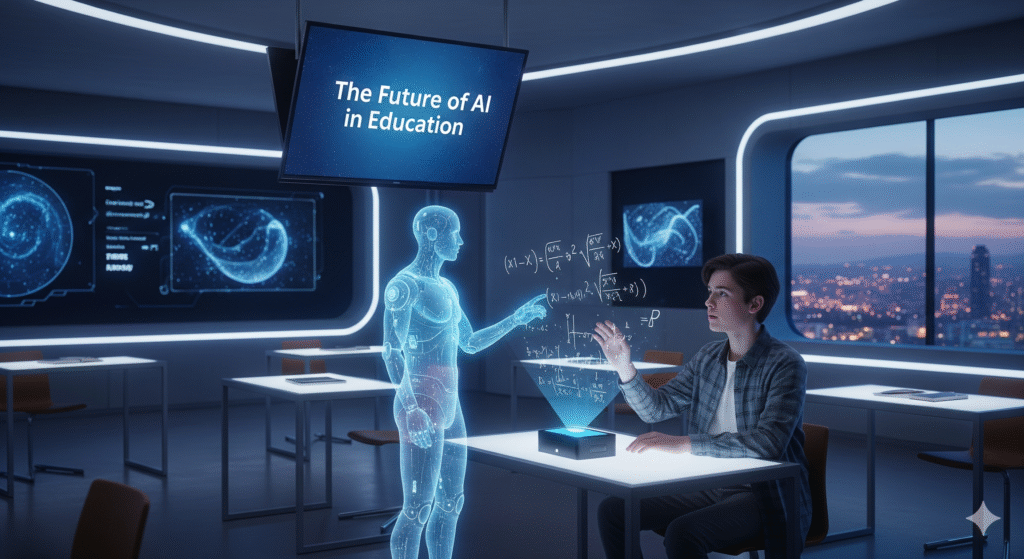
Looking ahead, the future of AI and education promises even more transformative changes:
Predictive Analytics will identify students at risk of falling behind or dropping out, enabling early intervention. AI-powered early warning systems will help educational institutions provide timely support to struggling students.
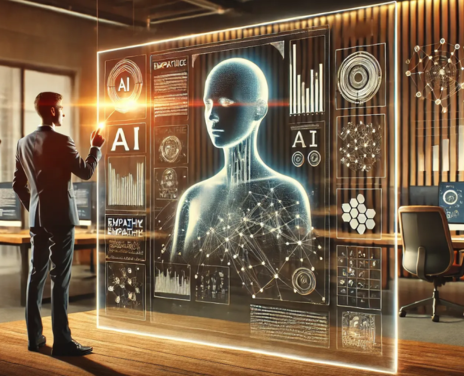
Emotion Recognition Technology will detect student frustration, confusion, or disengagement through facial expressions and interaction patterns, allowing AI systems to adjust teaching approaches in real-time or alert teachers to students needing additional support.
Lifelong Learning Platforms powered by AI will support continuous education throughout careers. As job markets evolve rapidly, AI-driven skill development will help professionals identify skill gaps and create personalized learning pathways for career advancement.
Global Collaboration will become seamless as AI translation and cultural adaptation tools enable students from different countries to work together on projects, breaking down language and cultural barriers.
How Teachers Can Embrace AI in Education
For educators wondering how to integrate AI into teaching, here are practical steps:
Start with AI tools for teachers that address your biggest pain points—whether that’s grading, content creation, or student assessment. Experiment with one tool at a time rather than overwhelming yourself with multiple platforms.
Invest in professional development for AI in education. Many organizations offer training on integrating AI tools effectively while maintaining pedagogical best practices. Understanding both capabilities and limitations of AI helps teachers use these tools strategically.
Maintain the human element in your teaching. Use AI to handle routine tasks, giving you more time for meaningful student interactions, creative lesson design, and personalized mentoring that only humans can provide.
Involve students in discussions about AI and learning. Help them understand how AI tools work, their benefits, and their limitations. Teaching digital literacy and critical thinking about AI prepares students for an AI-integrated future.
Preparing Students for an AI-Driven World
Beyond using AI in the classroom, education must prepare students to thrive in an AI-integrated society:
Teaching AI literacy should become as fundamental as traditional literacy and numeracy. Students need to understand basic AI concepts, how algorithms make decisions, and the ethical implications of AI technologies.
Emphasizing skills that complement AI ensures students remain competitive. Critical thinking, creativity, emotional intelligence, complex problem-solving, and ethical reasoning are uniquely human capabilities that will become increasingly valuable.
Encouraging responsible AI use helps students become thoughtful technology consumers and creators. Understanding issues like algorithmic bias, data privacy, and ethical AI development prepares them to build a better technological future.
Conclusion
AI in education is revolutionizing education in profound and lasting ways. From personalized learning experiences to intelligent tutoring systems, artificial intelligence in education offers unprecedented opportunities to improve learning outcomes, increase accessibility, and empower both students and teachers. However, realizing the full potential of AI in learning and development requires thoughtful implementation that addresses privacy concerns, ensures equitable access, and maintains the irreplaceable human elements of education. The goal isn’t to replace teachers but to augment their capabilities, giving them powerful tools to reach every student more effectively.
As we move forward, the question isn’t whether AI will transform education—it already is. The question is how we can harness this transformation to create more effective, accessible, and inspiring learning experiences for every student, everywhere. The future of education with AI is bright, and it’s being written today in classrooms around the world.