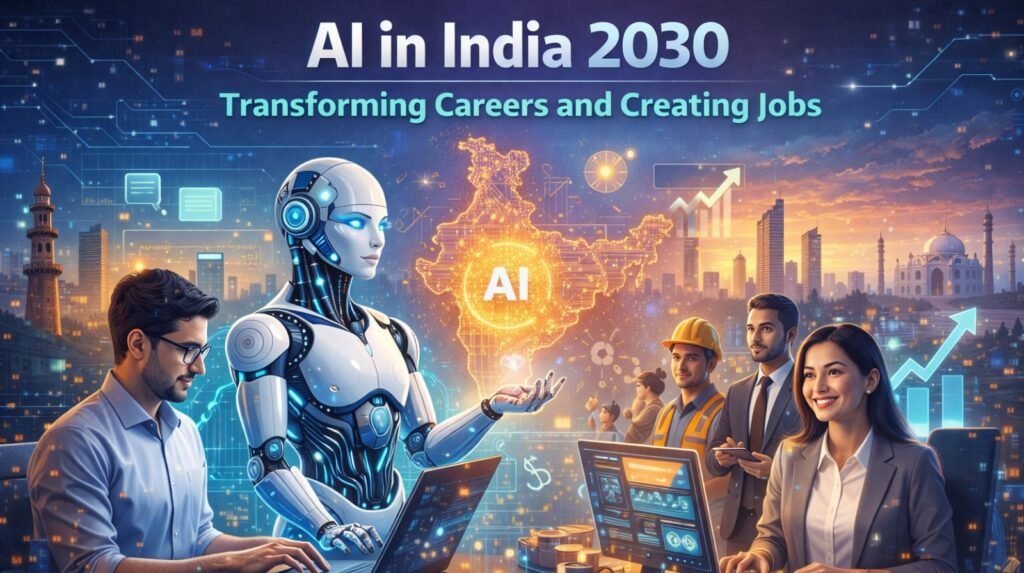
As we look towards , the landscape of employment is on the brink of a significant transformation. The integration of artificial intelligence is projected to create approximately 3 million new jobs, fundamentally reshaping traditional career paths and offering new opportunities. This blog explores how AI in India redefining the Indian job market, encouraging students and professionals to embrace this change and equip themselves with future-ready skills.
Introduction
The advent of artificial intelligence has begun to reshape various sectors, leading to unprecedented job creation and career transformation. By 2030, India is expected to witness a surge in AI-driven job opportunities, prompting many to explore AI job opportunities. This is not just a technological shift; it represents a paradigm change in how we perceive work and careers.
AI is not merely a tool for automation; it is a catalyst for innovation and new job roles. As we delve into the specifics, it’s essential to understand the broader implications of this transformation on the workforce and the skills required for future success.
The Rise of AI in India
India is positioning itself as a global leader in AI technology, with significant investments in research and development. The government’s initiatives and the rise of tech startups are propelling the growth of AI applications across industries. As a result, many sectors are beginning to integrate AI solutions, which is expected to learn about skill-based careers that will emerge as a result.
The increasing reliance on AI in India not just about efficiency; it’s about creating innovative solutions to complex problems. For instance, sectors like healthcare, agriculture, and finance are leveraging AI to enhance productivity and service delivery. This trend is paving the way for a new workforce skilled in AI technologies.
AI Adoption Across Sectors
- : AI is revolutionizing diagnostics and patient care, leading to new roles for AI specialists in medical technology.
- : Automation and predictive analytics are creating demand for data scientists and financial analysts skilled in AI.
- : Smart factories are emerging, requiring automation experts to manage AI-driven processes.
Government Initiatives
The Indian government has launched several initiatives aimed at fostering AI development, including funding for startups and research grants. These initiatives are expected to create a conducive environment for innovation and job creation.
Current Job Market Landscape
The current job market is witnessing a significant shift due to the rapid adoption of AI technologies. Traditional roles are evolving, and new job opportunities are emerging in response to this technological wave. It is crucial to understand AI’s impact on jobs to navigate this changing landscape effectively.
Job Creation vs. Job Displacement
While there are concerns about job displacement due to automation, the reality is that AI is creating more jobs than it eliminates. Many businesses are recognizing the need for skilled professionals to implement and manage AI systems, leading to a net increase in job opportunities.
The Demand for AI Skills
Recent data shows that the demand for AI-related skills is skyrocketing. Companies are looking for individuals who can not only understand AI technologies but also apply them effectively in their operations. This trend indicates a significant shift in the qualifications sought by employers.
Emerging Roles in AI
As AI continues to evolve, several new job roles are gaining prominence. These roles not only require technical expertise but also a strong understanding of how AI can be applied across different domains. Professionals should discover emerging job roles to align their career paths with these trends.
Key Emerging Roles
- : Experts who design and implement AI systems across various sectors.
- : Professionals who focus on streamlining processes using AI technologies.
- : Individuals who analyze and interpret complex data to inform AI solutions.
Case Studies of Successful AI Integration
Companies that have embraced AI are seeing remarkable results. For example, a leading Indian bank implemented AI-driven chatbots, significantly improving customer service and reducing operational costs. This success story highlights the potential of AI to create new job roles and enhance existing ones.
The Shift from Degree-Based to Skill-Based Careers
The traditional education model is being challenged as the job market increasingly favors skill-based qualifications over degree-based ones. This shift is essential for adapting to the demands of the AI-driven economy. Professionals must prepare for AI-related careers by focusing on acquiring relevant skills.
Importance of Continuous Learning
In an era where technology is rapidly changing, continuous learning is vital. Professionals must commit to lifelong learning to stay relevant in their fields. Online courses, certifications, and workshops are excellent ways to enhance skills and knowledge.
Skill Development Programs
Many organizations are now offering skill development programs aimed at equipping individuals with the necessary competencies to thrive in an AI-driven job market. These programs often focus on practical applications of AI technologies, ensuring that learners are job-ready upon completion.
How AI is Transforming Traditional Roles
AI is not only creating new jobs but also transforming existing roles. Traditional positions are evolving to incorporate AI tools, requiring professionals to adapt their skill sets. This transformation presents opportunities for career progression and innovation.
Reskilling and Upskilling
Professionals in traditional roles must embrace reskilling and upskilling to remain competitive. For instance, a marketing professional may need to learn about AI-driven analytics tools to enhance campaign effectiveness.
Collaboration with AI
The future of work will likely involve collaboration between humans and AI. Understanding how to effectively work alongside AI systems will be crucial for professionals across various industries.
Future-Ready Skills for Success
To thrive in the AI-driven economy, individuals must focus on developing future-ready skills. These skills will not only enhance employability but also prepare professionals for the challenges and opportunities that lie ahead.
Critical Thinking and Problem Solving
As AI in India takes over routine tasks, critical thinking and problem-solving skills will become increasingly valuable. Professionals who can analyze complex situations and devise innovative solutions will be in high demand.
Digital Literacy
Digital literacy is essential for navigating the AI landscape. Understanding how to leverage digital tools and platforms will empower professionals to maximize their productivity and effectiveness.
Motivating the Next Generation
Encouraging the next generation to embrace AI and technology is crucial for ensuring a skilled workforce. Schools and educational institutions must integrate AI-related subjects into their curricula to prepare students for future careers.
Role of Educators
Educators play a vital role in inspiring students to pursue careers in AI. By highlighting the exciting opportunities in this field, they can motivate students to develop relevant skills and knowledge.
Community Engagement
Community programs and workshops can also help raise awareness about the potential of AI. Engaging with local businesses and tech organizations can provide students with valuable insights and networking opportunities.
Conclusion and Call to Action
As we approach 2030, the landscape of work in India will be dramatically transformed by AI in India. The creation of 3 million jobs and the evolution of career paths present a unique opportunity for individuals to redefine their professional trajectories.
To succeed in this new economy, it is imperative that students and professionals take proactive steps to embrace AI, learn future-ready skills, and position themselves for success. Now is the time to embark on your AI journey and unlock the potential of a career in this exciting field. Embrace the change, develop your skills, and be part of the future of work.