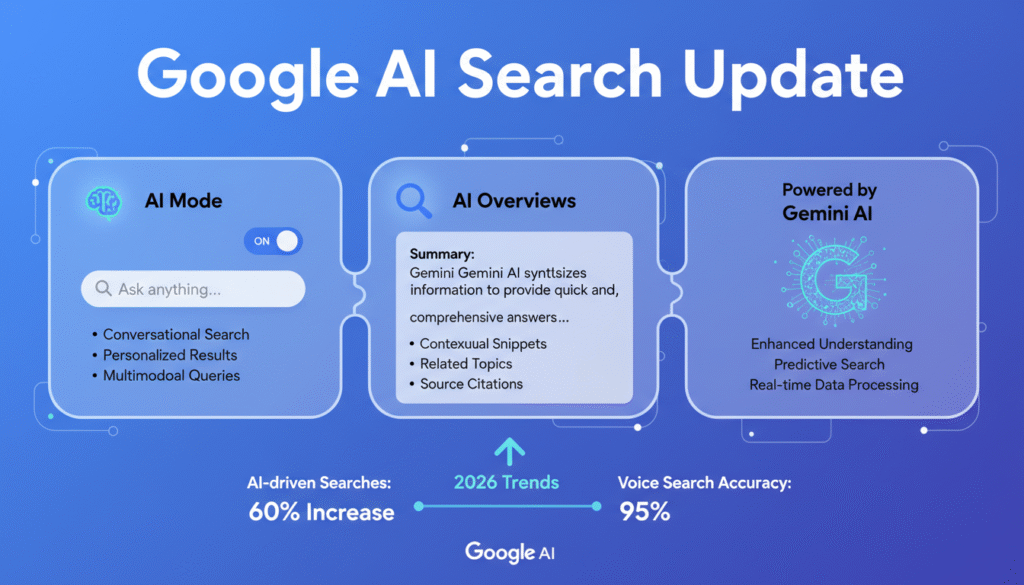
In 2026, the landscape of online searching has transformed significantly with the introduction of Google AI Search. This innovative approach integrates advanced AI technologies to enhance user experiences and streamline information retrieval. As businesses and individuals alike adapt to these changes, understanding the new features and functionalities of Google’s AI Search becomes essential. This article delves into the latest updates, including the AI Mode and AI Overviews, and how they are reshaping the future of search.
Introduction to Google’s Latest AI Search Update
The recent latest AI updates from Google mark a pivotal shift in how users interact with search engines. By leveraging machine learning and natural language processing, Google aims to provide more relevant and context-aware results. The introduction of AI Mode and AI Overviews are key components of this update, designed to enhance the user experience by delivering concise and informative responses.
As we explore these features, it’s important to recognize the broader implications for users, marketers, and businesses. The evolution of Google AI Search signifies a move towards a more intuitive and efficient way of finding information online. This transformation not only benefits users but also presents new opportunities and challenges for content creators and digital marketers.
What is Google AI Mode?
Google AI Mode is a new feature that allows users to engage with search results in a more interactive manner. This mode leverages AI algorithms to understand user intent better and deliver tailored responses.
Understanding AI Mode
AI Mode enhances traditional search by providing users with dynamic answers rather than static links. For instance, when a user asks for a recipe, Google AI Mode can generate a step-by-step guide, complete with ingredient lists and cooking tips, all within the search results.
Benefits of AI Mode Google
The benefits of AI Mode are manifold. It reduces the time users spend sifting through links, allowing them to find the information they need quickly. Moreover, it caters to diverse user preferences, whether they prefer visual content, detailed explanations, or quick summaries.
Businesses can leverage this feature to create content that aligns with AI-generated responses, ensuring they meet user expectations and improve engagement.
How Google AI Overviews Work
Google AI Overviews are another groundbreaking feature that provides users with a summarized view of complex topics. This tool is particularly useful for those seeking quick insights without delving into lengthy articles.
Exploring AI Overviews
When a user searches for a broad topic, Google AI Overviews condense information from various sources into a cohesive summary. This can include key points, statistics, and relevant insights, making it easier for users to grasp essential information at a glance.
Advantages of Google AI Overviews
The advantages of Google AI Overviews extend beyond user convenience. For content creators, this feature emphasizes the importance of producing high-quality, concise content that can be featured in these summaries. By optimizing for clarity and relevance, businesses can enhance their visibility in search results.
Key New Features in Google Search AI Update
The Google Search AI Update introduces several key features that enhance the overall search experience.
Innovative Features of Google Search AI
- Personalized Search Results: Google AI now considers user preferences and past search behavior to tailor results more effectively.
- Voice Search Optimization: As voice search becomes increasingly popular, Google has enhanced its AI capabilities to better understand and process spoken queries.
- Visual Search Integration: Users can now search using images, with AI providing context and information based on visual inputs.
These features collectively enhance the user experience, making Google’s AI-powered search engine more versatile and user-friendly.
SEO Implications of New Features
The introduction of these features necessitates a reevaluation of SEO best practices. Businesses must adapt their strategies to optimize for AI-driven results, focusing on content quality, user engagement, and relevance to maintain visibility in search results.
Difference Between Traditional Search vs AI-powered Search
Understanding the difference between traditional search and AI-powered search is crucial for users and marketers alike.
Traditional vs AI-powered Search
Traditional search engines rely heavily on keyword matching and link-based ranking. In contrast, AI-powered search utilizes advanced algorithms that understand context, user intent, and semantic meaning. This shift allows for more accurate and relevant results, catering to user needs more effectively.
Future of Technology in Search
The future of search lies in the continued evolution of AI technologies. As Google integrates more advanced features, users can expect increasingly sophisticated search capabilities that prioritize user experience and information accessibility. Businesses must stay informed about these changes to adapt their strategies accordingly.
Role of Gemini AI in Google Search
Gemini AI is a significant component of Google’s AI Search enhancements. This advanced AI model is designed to analyze vast amounts of data and provide insights that improve search accuracy and relevance.
Gemini AI’s Contribution
Gemini AI enhances Google’s ability to understand complex queries and deliver precise answers. By analyzing user behavior and preferences, it can predict what information users are likely to seek, thereby streamlining the search process.
User and Business Benefits
The integration of Gemini AI into Google Search offers numerous benefits for both users and businesses. Users gain access to more accurate and contextually relevant information, while businesses can leverage these insights to tailor their content and marketing strategies effectively.
Benefits for Users, Creators, and Businesses
The advancements in Google AI Search provide significant benefits across the board.
User Benefits
- Enhanced Search Experience: Users enjoy a more intuitive and efficient search process, leading to quicker access to information.
- Personalized Results: AI-driven personalization ensures that users receive results that align with their interests and needs.
Creator and Business Benefits
- Increased Engagement: Businesses that optimize their content for AI features can achieve higher engagement rates.
- Improved Visibility: By aligning with AI-driven search trends, businesses can enhance their visibility in search results, driving more traffic to their websites.
Impact on SEO and Digital Marketing
The evolution of Google AI Search has profound implications for SEO and digital marketing strategies.
SEO Implications
Businesses must adapt their SEO strategies to align with the new AI features. This includes focusing on content quality, user experience, and optimizing for voice search and AI-generated summaries.
Challenges Ahead
While the advancements in AI-powered search offer numerous opportunities, they also present challenges. Businesses must navigate the complexities of AI algorithms and ensure their content remains relevant and engaging in a rapidly evolving landscape.
Potential Challenges and Concerns
As with any technological advancement, the shift towards AI-powered search presents potential challenges.
Challenges Ahead
- Content Competition: With AI generating summaries and overviews, businesses may face increased competition for visibility.
- Algorithm Changes: Frequent updates to AI algorithms can make it challenging for businesses to keep up with SEO best practices.
Looking Forward
Organizations must remain agile and adaptable to thrive in this new landscape. Continuous learning and optimization will be key to leveraging the benefits of AI-powered search effectively.
Future of AI-driven Search Engines
The future of AI-powered search engines is promising, with ongoing developments expected to enhance user experiences further.
Trends to Watch
- Increased Personalization: Future google AI search tools will likely offer even more personalized experiences based on user behavior and preferences.
- Greater Integration with Other Technologies: As AI continues to evolve, its integration with other technologies, such as augmented reality and the Internet of Things, will reshape how users interact with information.