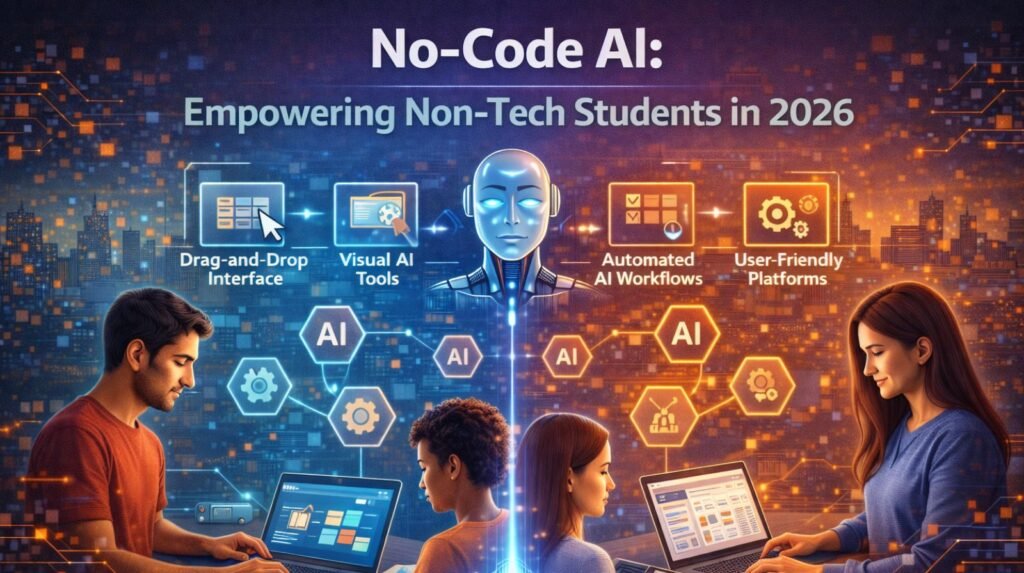
In 2026, the landscape of entrepreneurship is evolving rapidly, with tools enabling students from non-technical backgrounds to launch their startups. This trend is not just a passing phase; it represents a fundamental shift in how innovation is approached. Students studying commerce, arts, and other non-technical fields are now equipped with powerful resources like Bubble, Zapier, and ChatGPT, allowing them to create real-world solutions without any coding knowledge. This blog aims to inspire and guide aspiring entrepreneurs to harness the power of no-code AI.
Introduction to No-Code AI
No-code AI refers to the use of artificial intelligence tools that do not require programming skills to develop applications or solutions. This democratization of technology is empowering a new wave of entrepreneurs, particularly students who may not have a traditional tech background. Many students are now able to conceptualize and implement their ideas into functioning products through intuitive interfaces and user-friendly platforms. For those interested in exploring AI startups, the no-code movement presents an exciting opportunity to bring innovative ideas to life.
The rise of no-code AI is transforming the startup ecosystem. It allows individuals to focus on creativity and problem-solving rather than getting bogged down by technical complexities. As more students embrace this model, we are likely to see a surge in diverse applications across various sectors, from e-commerce to education.
The Importance of No-Code AI for Students
The significance of no-code AI for students cannot be overstated. It provides a platform where creativity meets technology, enabling them to develop solutions that address real-world problems. By leveraging no-code tools, students can focus on their core competencies while still participating in the digital economy.
The Future of Entrepreneurship
As we look ahead, the future of entrepreneurship will be increasingly defined by accessibility and inclusivity. No-code AI is paving the way for a generation of innovators who can turn their ideas into reality without the barriers typically associated with tech startups.
The Rise of No-Code Platforms
The proliferation of no-code platforms has been a game-changer for aspiring entrepreneurs. Platforms like Bubble, Zapier, and ChatGPT are leading this charge by providing accessible tools that empower users to build applications, automate workflows, and create AI-driven solutions. In 2026, many businesses are leveraging no-code platforms overview to streamline their operations and enhance productivity.
Key Features of No-Code Platforms
- : Most no-code platforms feature drag-and-drop interfaces, making it easy for users to design applications without needing to write a single line of code.
- : Many of these tools allow for seamless integration with existing services and APIs, enabling users to extend functionality without technical hurdles.
- : Students can quickly build prototypes and iterate on their ideas, significantly reducing the time from concept to market.
The Growth of No-Code Ecosystem
The no-code ecosystem is expanding rapidly. In 2026, the market for no-code development platforms is projected to grow significantly, driven by the increasing demand for agile development practices. This growth is opening new avenues for students to engage in entrepreneurship without the need for extensive technical training.
How No-Code Tools Empower Non-Tech Students
No-code tools are leveling the playing field for students who may not have a technical background. By providing accessible platforms, these tools enable students to develop their ideas into tangible products. The ability to create applications without coding knowledge is a powerful motivator for innovation. Many students are discovering the benefits of no-code tools as they embark on their entrepreneurial journeys.
Encouraging Creativity and Innovation
No-code tools encourage students to think creatively. With the technical barriers removed, students can focus on ideation and problem-solving. This freedom often leads to innovative solutions that may not have emerged in a traditional coding environment.
Building Confidence
For many students, the ability to create something from scratch using no-code tools builds confidence. This newfound ability to bring ideas to life can be transformative, encouraging them to take risks and pursue entrepreneurial ventures.
Collaboration Opportunities
No-code platforms often foster collaboration among students from different disciplines. Arts students can team up with commerce students to create solutions that blend creativity with business acumen, resulting in unique products that address diverse market needs.
Examples of Successful No-Code AI Startups
There are numerous success stories of students who have harnessed no-code AI tools to launch their startups. These examples serve as inspiration for aspiring entrepreneurs looking to make their mark in the tech landscape. Many students are now learning about getting started with AI through these real-world applications.
Case Study: A Marketplace for Local Artisans
One notable example is a platform created by a group of arts students who developed a marketplace for local artisans using Bubble. The platform allows artisans to showcase and sell their products directly to consumers, bridging the gap between traditional crafts and modern commerce.
Case Study: Automating Customer Support
Another example comes from a group of commerce students who used Zapier to automate customer support for a small business. By integrating various tools, they created a system that responded to customer inquiries instantly, significantly improving the business’s efficiency and customer satisfaction.
Case Study: Personalized Learning Solutions
A team of students from a non-technical background developed a personalized learning app using ChatGPT. This application tailors educational content based on individual learning styles, demonstrating how no-code tools can lead to impactful educational innovations.
Benefits of Using No-Code AI
The advantages of utilizing no-code AI tools are numerous, particularly for students. These benefits extend beyond just ease of use; they encompass a range of factors that contribute to successful entrepreneurial ventures. Many businesses are now championing innovation in education through no-code solutions.
Cost-Effective Development
No-code tools significantly reduce development costs. Students can build and launch their projects without the need for expensive development teams, making entrepreneurship more accessible.
Faster Time to Market
With no-code platforms, students can bring their products to market faster. Rapid prototyping and iteration allow for quick adjustments based on user feedback, leading to better final products.
Scalability
Many no-code tools offer scalability options, allowing startups to grow without the need for extensive rework. This flexibility is crucial for students looking to expand their ventures as demand increases.
Step-by-Step Guide to Getting Started with No-Code AI
Embarking on your no-code AI journey is an exciting venture. Here’s a simple step-by-step guide to help you get started:
Step 1: Identify Your Idea
Begin by brainstorming ideas that solve a problem or fulfill a need in the market. Think about your interests, experiences, and the challenges you or others face.
Step 2: Research No-Code Tools
Explore various no-code platforms like Bubble, Zapier, and ChatGPT. Determine which tools align best with your project requirements and personal preferences.
Step 3: Learn the Basics
Familiarize yourself with the chosen no-code platform through tutorials and documentation. Many platforms offer free resources to help you get started.
Step 4: Build Your Prototype
Start building your prototype using the platform’s features. Focus on creating a minimum viable product (MVP) that showcases your core idea.
Step 5: Gather Feedback and Iterate
Once your prototype is ready, share it with potential users to gather feedback. Use this input to make necessary improvements and refine your product.
Step 6: Launch Your Product
After finalizing your product, launch it to the market. Use social media and other channels to promote your startup and attract users.
Step 7: Continue Learning and Adapting
The entrepreneurial journey is ongoing. Keep learning, adapting, and innovating to stay relevant in the ever-changing landscape of technology and business.